Chiesa, ex Convento di Santa Maria Nuova ed Oratorio del Crocefisso – Church and former Convent of Santa Maria Nuova and Crucifix Oratory
Insediamento benedettino fu abbandonato nel 1372 a causa della costruzione della fortezza papale di Porta Sole - del Monmaggiore
The Benedectine complex was abandoned in 1372 because of the construction of the papal fortress of Porta Sole - Monmaggiore
Descrizione
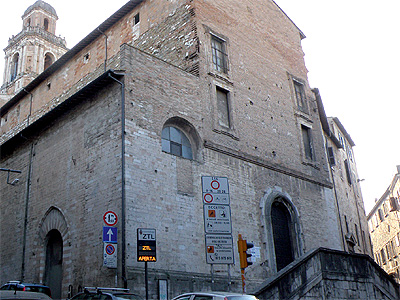
Il complesso, documentato nel 1285, come insediamento benedettino, fu abbandonato nel 1372 a causa della costruzione della fortezza papale di Porta Sole, cosiddetta del Monmaggiore. Sul fianco sinistro si conserva un portale e due arcate ogivali. Nel 1404 passò ai Padri Silvestrini, che ristrutturarono la chiesa per volere di Braccio Fortebraccio.
Ricostruito quasi per intero nel 1568, prese l’appellativo di Nuova, per l’arrivo dei Padri Serviti, provenienti dalla chiesa di S. Maria dei Servi, sul Colle Landone, demolita per far posto alla Rocca Paolina. Il campanile del 1644 fu realizzato su probabile disegno di Galeazzo Alessi.
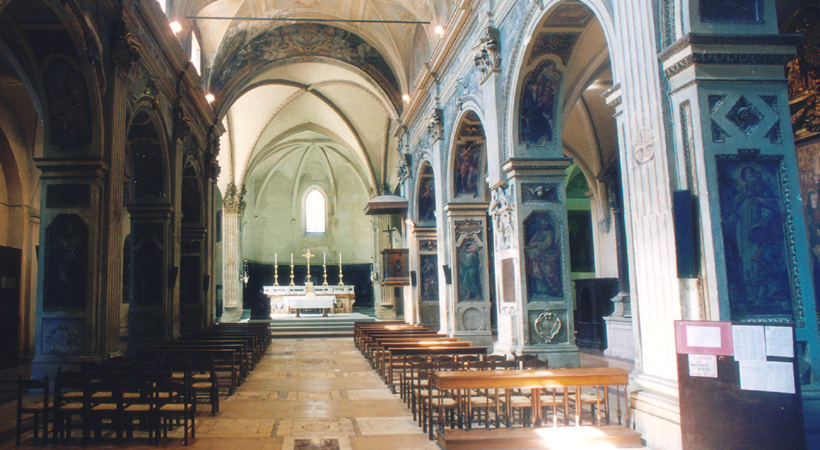
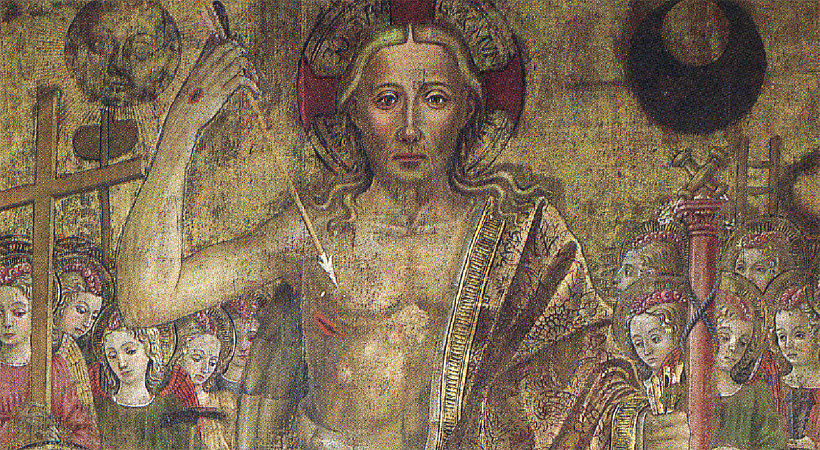
All’interno, è un prezioso patrimonio: nelle cappelle ai lati dell’abside affreschi del XV sec, e in quella di destra, l’ara con le spoglie di Braccio Baglioni, nipote di Braccio Fortebraccio. Sulle parete affreschi con stucchi manieristi del XVI sec. e tele di artisti locali (XVI – XVII sec.), il coro del XV sec., il gonfalone di Benedetto Bonfigli (1471), il seicentesco altare della Compagnia degli “Ultramontani”, un grandioso organo di contro-facciata del 1584. Nella chiesa vi erano opere di Pietro Vannucci, oggi alla National Gallery di Londra e alla Galleria Nazionale dell’Umbria, di Nicolò Liberatore detto l’Alunno e di Fiorenzo di Lorenzo nella Galleria Nazionale dell’Umbria, e di Gian Nicola di Paolo ora al Louvre.
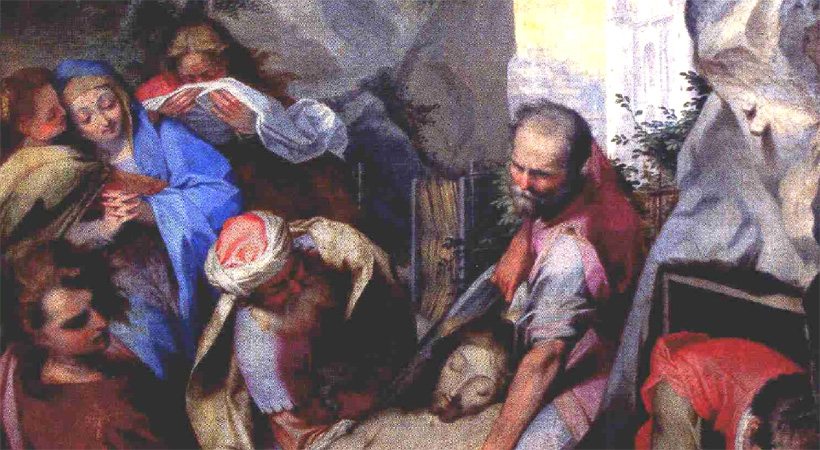
Dalla navata destra si accede all’Oratorio del Crocefisso (1519), un’aula rettangolare con volta decorata da finte architetture di Pietro Carattoli, con al centro la Gloria della Croce di Antonio M. Garbi (1750). L’altare eseguito su progetto di Valentino Martelli (1593) contiene la Deposizione di Felice Pellegrini (1593).
Accanto alla chiesa è l’Ex Convento di S. Maria Nuova, ricostruito dopo il 1540, a seguito della distruzione del convento di S. Maria dei Servi (sul Colle Landone), del quale reimpiega le colonne del chiostro. Il complesso, di proprietà ecclesiastica, ristrutturato recentemente, è adibito a residenze private e dotato di una Sala Capitolare per convegni ed eventi (accessibile al civico n. 87 di via Pinturicchio)
__________________________
Originally a Benedictine settlement, as seen in documents of 1285, the complex was abandoned in 1372 because of the construction of the papal fortress of Porta known as the Monmaggiore Fortress. On the left side still visible a portal and two ogive arches. In 1404 it was acquired by the Padri Silvestrini Order, who restored the church as ordered by Braccio Fortebraccio.
The church, rebuilt almost wholly in 1568, was after that named New, for the arrival of the Padri Serviti Order, coming from the church of S. Maria dei Servi, in the Landone Hill, demolished because of the construction of the Rocca Paolina. The bell tower was built in 1644 based on the project by Galeazzo Alessi.
Inside some precious works: in the chapels siding the apse XV Century frescos, in the one on the right side the urn with the remains of Braccio Baglioni, nephew of Braccio Fortebraccio. On the walls the rich stucco and mannerist frescos of the XVI Century, XVI – XVII Centuries paintings of local artists, the XV Century choir, the banner by Benedetto Bonfigli (1471), the altar of the XVII Century of the Compagnia degli “Ultramontani”, a magnificent organ on the counter façade of 1584. Inside the church there were formerly paintings by Pietro Vannucci, also known as the Perugino, today in the London National Gallery and in the Galleria Nazionale of Umbria, some by Nicolò Liberatore also known as l’Alunno and by Fiorenzo di Lorenzo, today in the Galleria Nazionale of Umbria, and by Gian Nicola di Paolo, today in the Louvre.
In the right nave the entry to the Oratorio del Crocefisso (1591), a rectangular room with a vault painted by da Pietro Carattoli and decorated by false architecture; at the centre a Glory of the cross by M. Garbi (1750). The altar, based on a project by Valentino Martelli (1593) shows a Deposizione by Felice Pellegrini (1593).
Close to the church there’s the former Convent of S. Maria Nuova, rebuilt after 1540, following the destruction of the convent of S. Maria dei Servi (on Landone Hill), of which the colums of the cloister were here reused. The complex, owned by the church, has been recently renovated and is now used as private residence and as meeting place for several events (Entrance at n 87 via Pinturicchio).
Galleria di immagini
Modalità di accesso
Non accessibile a persone con disabilità motoria
__________________________
Not wheelchair accessible
Dove
Indirizzo
CAP
Orari di apertura
Per orari consulta i contatti che trovi su ulteriori informazioni
__________________________
For opening hours see ulteriori informazioni
Contatti
Ulteriori informazioni
Info
Parrocchia S. Andrea e S. Lucia – +39 075 5720631