Chiesa di San Prospero – Church of San Prospero
I più antichi affreschi della città
The city’s oldest frescoes
Descrizione
Rimaneggiata nel corso dei secoli, sorse nel VII-VIII sec. su un preesistente sito archeologico, divenendo parte di un insediamento monastico
Nel XVI sec. fu inglobata in un edificio più grande. Anche l’orientamento fu invertito, visto che tracce del primitivo ingresso sono visibili sul retro. Alcuni reperti etruschi sono stati inglobati nelle mura perimetrali.
L’originario soffitto a capriate è stato abbassato e sostituito nel XVI sec. con volta a botte. All’interno si ammira uno splendido ciborio in marmo del periodo longobardo dell’VIII sec., con un compendio di temi figurativi paleocristiani-ravennati, mescolati a quelli di derivazione classica, quali i pavoni, gli specchi rovesciati.
Nella parete di fondo è la statua di San Prospero di gusto arnolfiano della fine del XIII sec.
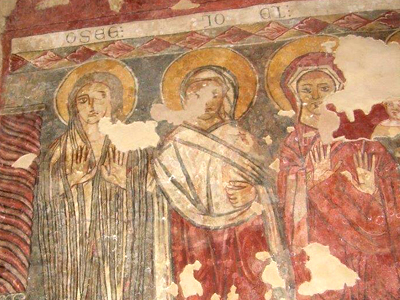
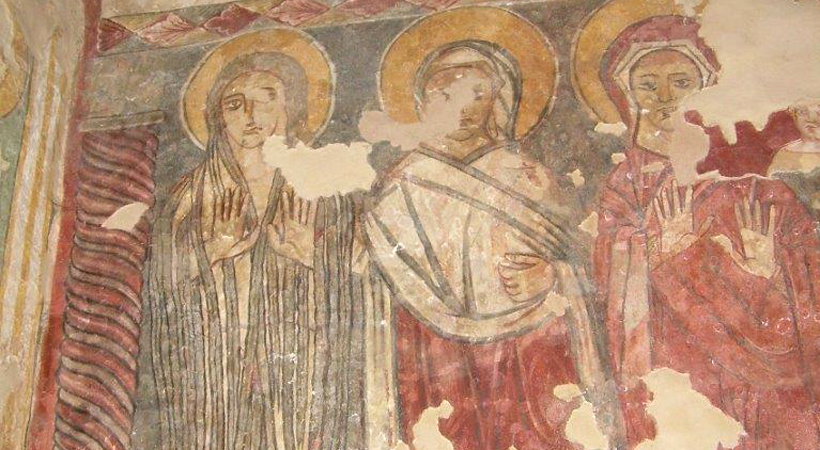
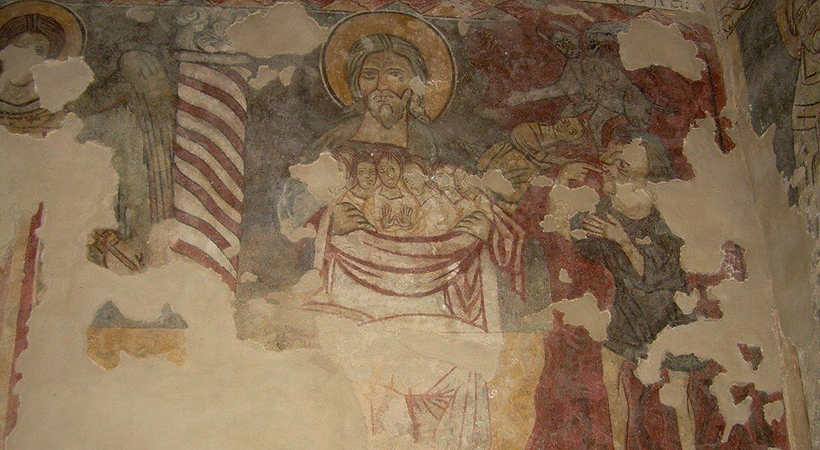
Nell’unica cappella di destra sono gli affreschi più antichi di Perugia, datati 1225, di Bonamico, un artista locale che con la sua semplicità stilistica, rompe gli schemi della tradizione bizantina.
Il suo gusto primitivo “sermo rusticus” contrasta con la complessità iconografica di ispirazione paleocristiana e greca (secondo P. Scarpellini).
______________________________
Altered over the centuries, it was built in the VII- VIII Centuries on a pre-existing archaeological site, became part of a monastic complex.
In the XVI Century it was incorporated in a bigger building. Also its orientation has been altered, as it can be seen from traces of the prior entrance, on the rear. Some Etruscan relics have been inserted inside the perimetric walls.
The original wooden truss ceiling was lowered and finally substituted in the XVI Century with a vaulted one. Inside a VIII Century marble ciborium of the Lombard period, with paleo Christian imagery. Together with classic figures as peacocks and upside-down glasses
In the rear wall the statue of San Prospero, of arnolfian taste of the end of XIII Century. Inside the only chapel on the right are the most ancient frescos of Perugia, dating back to 1225, by Bonamico, a local artist who broke the traditional byzantine scheme with his stylistic simplicity.
His primitive taste “sermo rusticus” contrasts the the iconographic complexity of paleo Christian and byzantine inspiration (according to P. Scarpellini)
Galleria di immagini
Modalità di accesso
Accessibile a persone con disabitilità motoria da Via Don Bosco, 5
______________________________
Wheelchair accessible from Via Don Bosco, 5
Dove
Indirizzo
CAP
Orari di apertura
Possibilità di visita su prenotazione. Per orari e costi consulta i contatti che trovi su ulteriori informazioni
______________________________
It is possible to reserve guided tours. For opening hours and entrance fees see the contact in ulteriori informazioni
Contatti
Ulteriori informazioni
Info
Istituto Don Bosco
+39 075 5733880