Santuario Madonna della Villa – Madonna della Villa Sanctuary
Costruita alla fine del trecento con lo scopo di proteggere un’edicola contenente l’immagine di una Madonna col Bambino, XIV sec
built at the end of the XIV century with the aim of protecting a shrine containing the image of a Madonna and Child, XIV C.
Descrizione
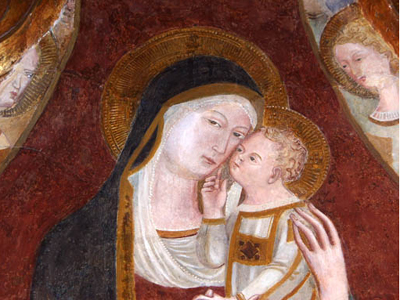
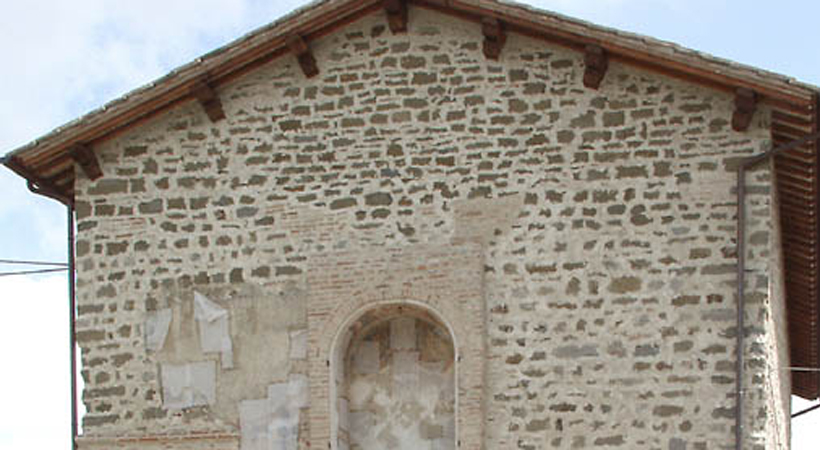
La Madonna della Villa a Sant’Egidio fu costruita alla fine del trecento con lo scopo di proteggere un’edicola contenente l’immagine di una Madonna col Bambino del XIV sec., ritenuta miracolosa. Ha le caratteristiche di un santuario processionale con le due porte di accesso poste sui lati corti, ed è ubicata sull’antica via che conduce ai santuari di Assisi e Loreto.
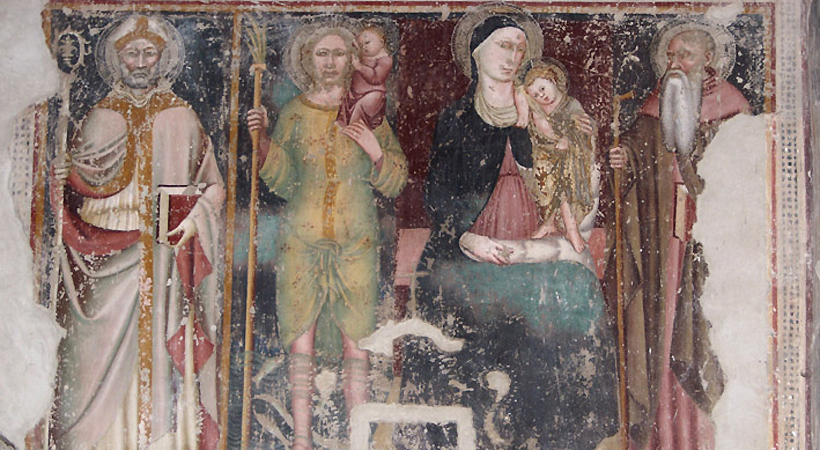
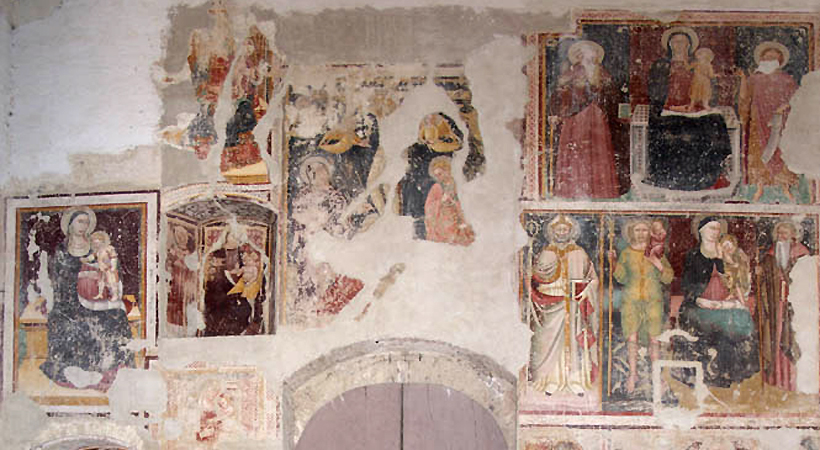
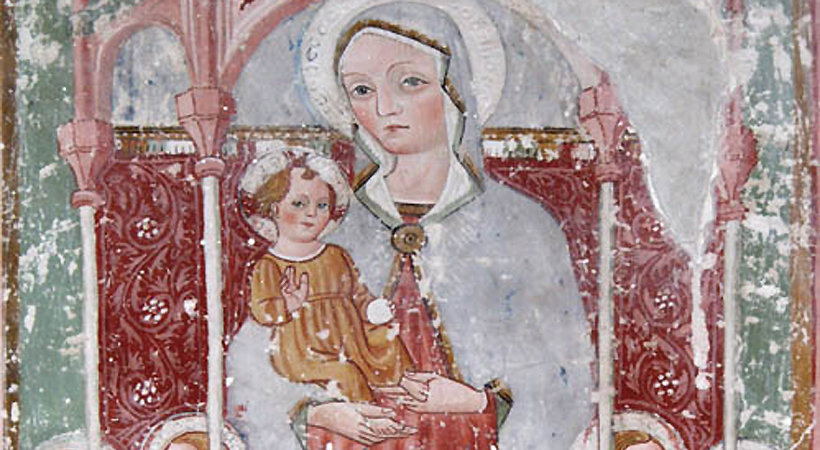
Dal XIV al XVI sec., grazie ai contributi dei pellegrini, fu arricchita con più di 50 affreschi votivi, che rappresentano la devozione popolare. Il risultato è una superfice di oltre 230 metri quadrati di affreschi, di scuola umbra e senese, dipinti anche a più strati uno sopra l’altro, che fanno della chiesetta una piccola e preziosa pinacoteca del culto mariano in Umbria.
Il soggetto più rappresentato è la Madonna col Bambino, raffigurata anche come Madonna del latte, insieme ai santi, Sant’Antonio Abbate (protettore degli animali), San Cristoforo (invocato a protezione dalla grandine e dalle alluvioni, oltreché santo dei pellegrini), San Sebastiano (protettore dalla peste) e Santa Caterina d’Alessandria (cara alle donne che allattano e alle nutrici).
______________________________
The Madonna of the Villa in Sant Egidio was built at the end of the XIV century with the aim of protecting a shrine containing the image of a Madonna and Child from the XIV century, considered miraculous. It has the characteristics of a processional sanctuary with two access doors placed on the short sides, and is located on the ancient road, which leads to the sanctuaries of Assisi and Loreto.
From the XIV to the XVI century, thanks to the contributions of the pilgrims, the sanctuary was enriched with more than 50 votive frescoes, which represent popular devotion. The result is a surface of over 230 square meters of frescoes, from Umbrian and Senese schools, painted also in several layers one above the other, which make the church a small and precious picture gallery of the Marian cult in Umbria.
The most represented subject is the Madonna and Child, also depicted as the Madonna of the milk, together with the saints, Sant’Antonio Abbate (protector of animals), San Cristoforo (invoked to protect from hail and floods, as well as saint of pilgrims), San Sebastiano (protector from the plague) and Santa Caterina d’Alessandria (precious for breast-feeding women and nurses).
Galleria di immagini
Modalità di accesso
Accessibile a persone con disabilità motoria
______________________________
Wheelchair accessible
Dove
Indirizzo
CAP
Orari di apertura
Visite su appuntamento, previa prenotazione. Visite guidate su richiesta. Vedi Ulteriori informazioni
______________________________
Visits – also Guided tours – upon reservation. See the contact in Ulteriori informazioni
Contatti
Ulteriori informazioni
Info
Info e prenotazioni: Gianni Mantovani Tel. +39 347 0013551 – giannimantovani@alice.it ; Alba Tozzuolo Tel. +39 338 1949375 – alba.tozzuolo@libero.it .