Convento della Santissima Pietà di Farneto – Convento of the Santissima Pietà in Farneto
Il romitorio di Francesco
Francesco Hermitage
Descrizione
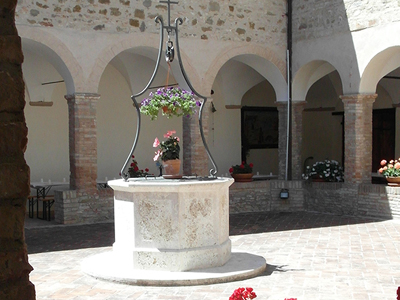
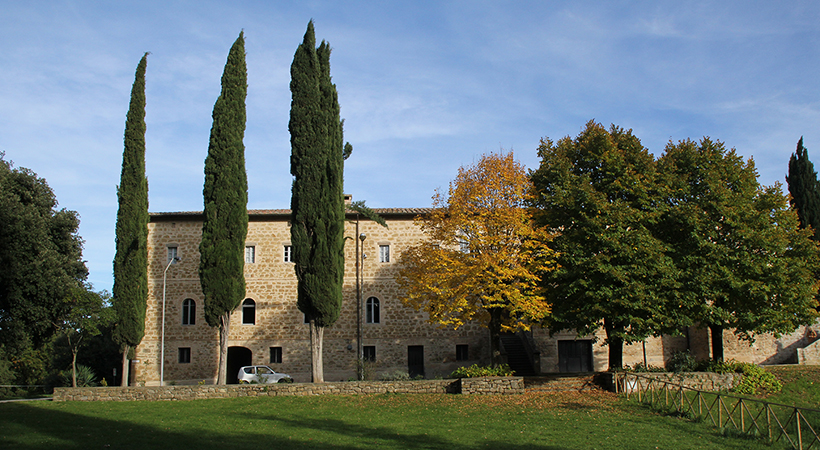
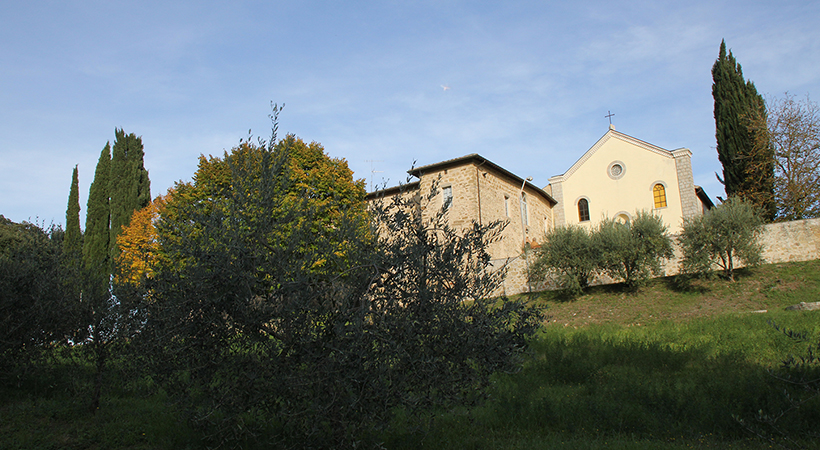
Situato su un’altura circondata da un bosco di farnie, residenza dei Frati Minori dell’Umbria, fu donato nel 1218 a San Francesco dai monaci benedettini del vicino monastero di San Giustino.
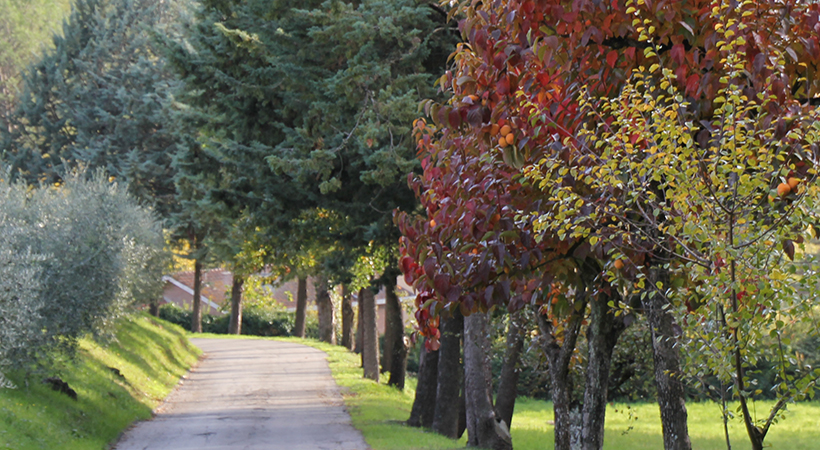
Dell’antico complesso restano pochissime tracce. Nel XV sec. San Bernardino da Siena fece costruire una nuova ala e nel 1705 fu costruito l’ospizio per il ricovero dei poveri e dei mendicanti. Un nuovo dormitorio per i frati fu costruito nel 1757 e ristrutturato, in parte, già nel 1778. Nel 1762, lungo il viale d’accesso al convento, furono costruite delle piccole edicole per le tappe della Via Crucis, completamente restaurate nel 1904.
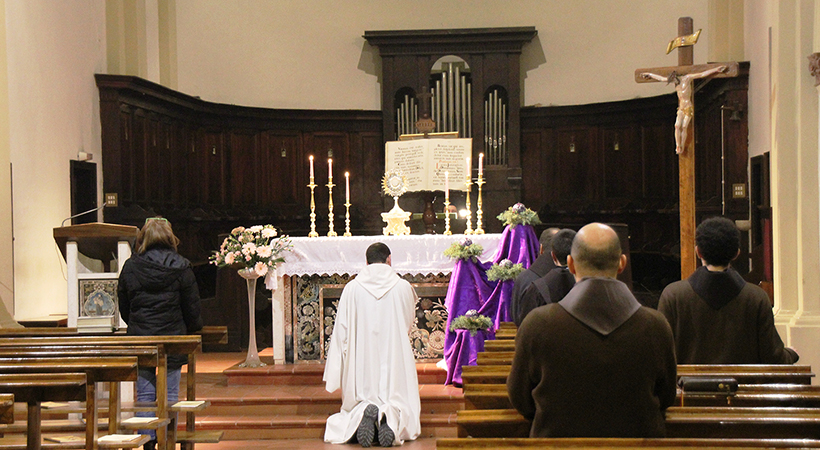
Al monastero di Farneto era annessa la chiesa di Santa Maria della Santissima Pietà, di epoca medioevale. Sopra di essa, alla fine del Seicento, ne fu edificata un’altra con lo stesso titolo. Nella chiesa si trovano le copie di un trittico di Pellegrino di Giovanni e di un dipinto del XIII sec., raffigurante la Madonna, Gesù Bambino e alcune scene della Passione, attribuito al Maestro del Farneto. Gli originali si trovano nella Galleria Nazionale dell’Umbria a Perugia. Dell’epoca originaria, rimane soltanto la piccola cappella nel bosco, costruita intorno al 1300 nel luogo in cui San Francesco si recava in preghiera.
______________________________
The hermitage is on the summit of a hill surrounded by a farnie wood and it’s residence of the Frati Minori of Umbria. It was given to San Francesco from the Benedictine monks of the nearby Monastery of San Giustino.
Only few traces of the ancient complex are still visible. In the XV Century San Bernardino da Siena built a new wing and in 1705 a new hospice for the shelter of the poor and beggars. A new dormitory for the monks was made in 1757 and renovated, in parts, already in 1778. In 1762, some little votive shrines were built for the via crucis along the entrance avenue and they were restored in 1904.
To the convent of Farneto was annexed the church of di Santa Maria della Santissima Pietà, of medieval age. Above it, at the end of the XVII Century, another one was erected with the same name. Inside the church we can find copies of the triptych by Pellegrino di Giovanni and a painting of the XIII Century, depicting the Holy Mary, Baby Jesus and some scenes from the passion, attributed to Maestro del Farneto. The original paintings are now in the Galleria Nazionale of Umbria in Perugia. From the early period only the little chapel in the wood, built around 1300 and where San Francesco used to pray, is still there.
Galleria di immagini
Modalità di accesso
Accessibile a persone con disabitilità motoria attraverso la porta di servizio collocata nel retro aperta quando c’è necessità.
______________________________
Wheelchair accessible by the rear door, open if necessary.
Dove
Indirizzo
CAP
Orari di apertura
Per orari e costi consulta i contatti che trovi su ulteriori informazioni
______________________________
For opening hours and entrance fees see the contact in ulteriori informazioni
Contatti
Ulteriori informazioni
Info
Per prenotazioni:
Convento SS. Pietà Farneto – +39 075 603113
www.assisiofm.it