Basilica e Abbazia di San Pietro – Basilica and Abbey of San Pietro
L’antica Cattedrale della città
The ancient city Cathedral
Descrizione
Il complesso benedettino di San Pietro, fondato nel 966 dall’abbate Pietro, sorge dove già nel VI sec. era l’antica Cattedrale, in un’area sacra etrusco-romana. Del X sec. è rimasto l’impianto basilicale a tre navate
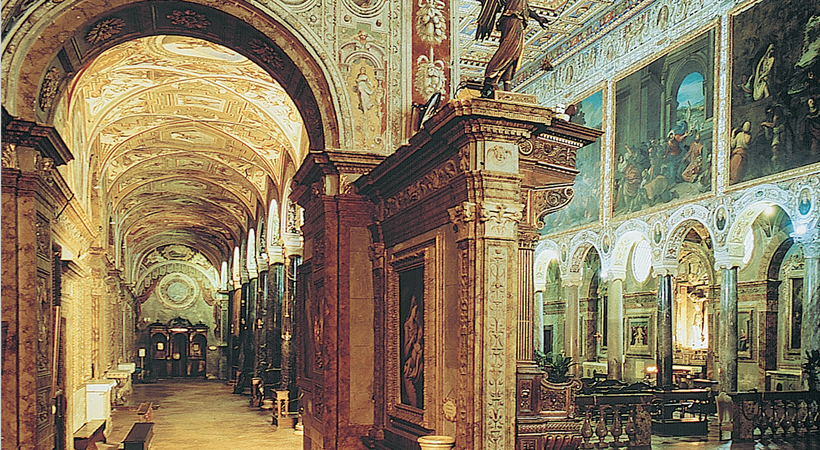
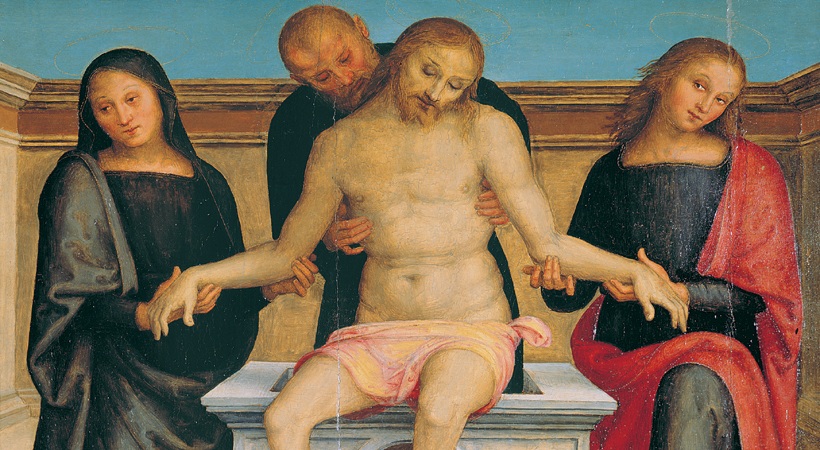
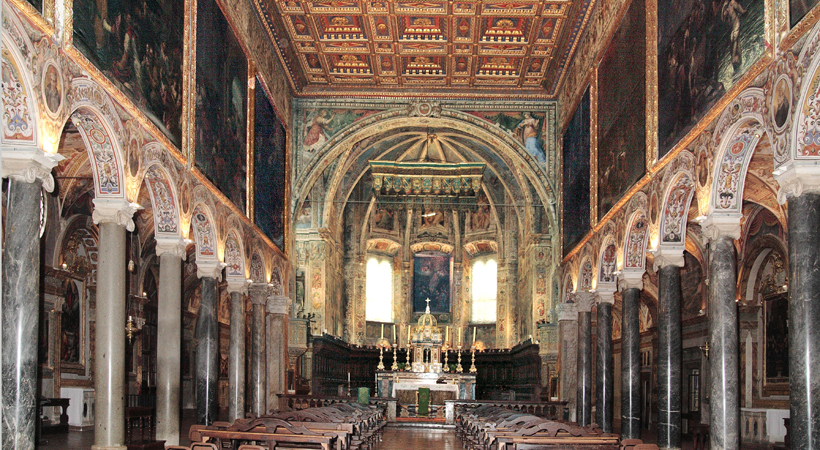
La facciata, conserva affreschi del Trecento, tra cui una rara trinità trifronte. L’interno presenta colonne con capitelli ionici, soffitto a lacunari dorato e numerosi dipinti e sculture realizzate tra il XV e il XIX secolo, fra le quali opere del Perugino e del Vasari, oltre che le tele con Scene dalla Vita di Gesù, dell’Antico e Nuovo Testamento e il Trionfo dell’Ordine benedettino, dipinte da Antonio Vassilacchis, detto l’Aliense (1592-94).
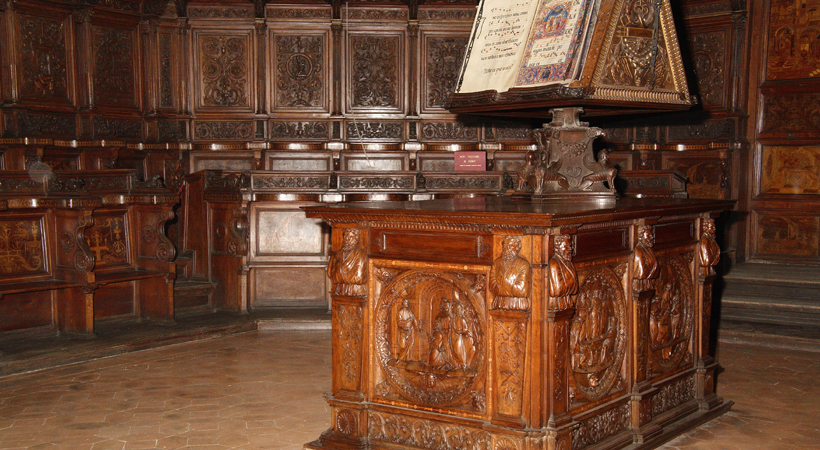
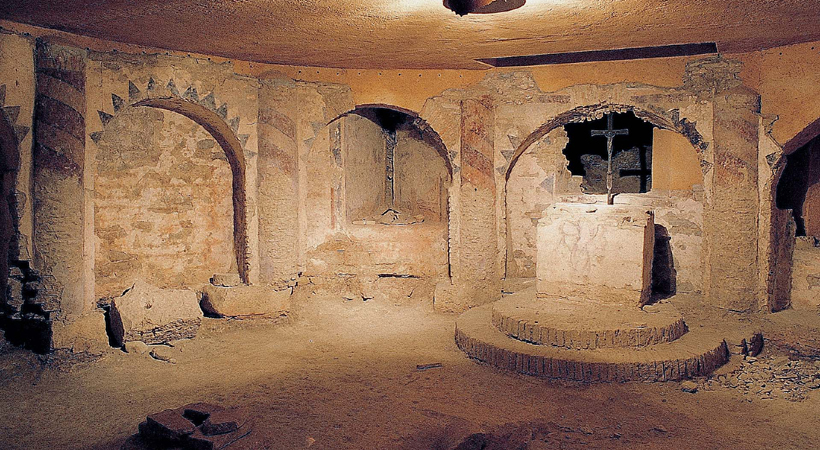
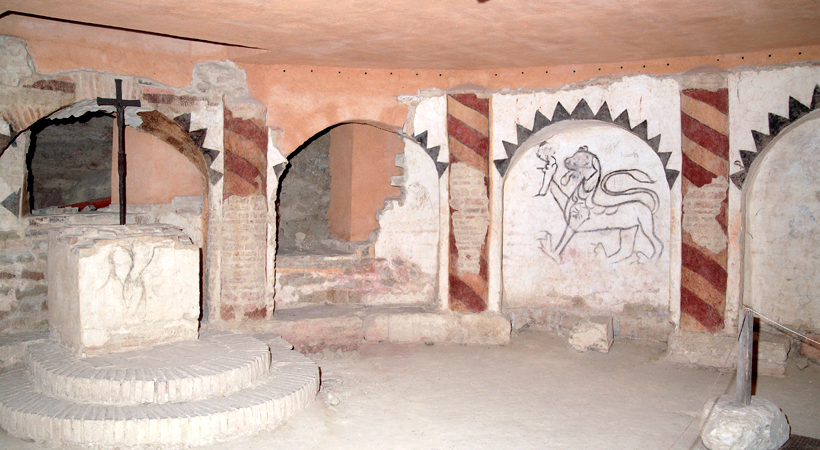
Nel coro e nelle navate laterali sono affreschi tardomanieristici, mentre il coro ligneo è di scuola lombarda. Al di sotto dell’abside si trova la cripta altomedievale, a pianta circolare, con ambulacro e pareti dipinte con singolari motivi geometrici.
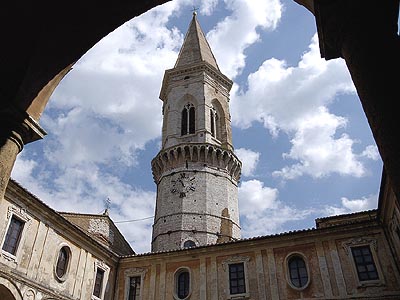
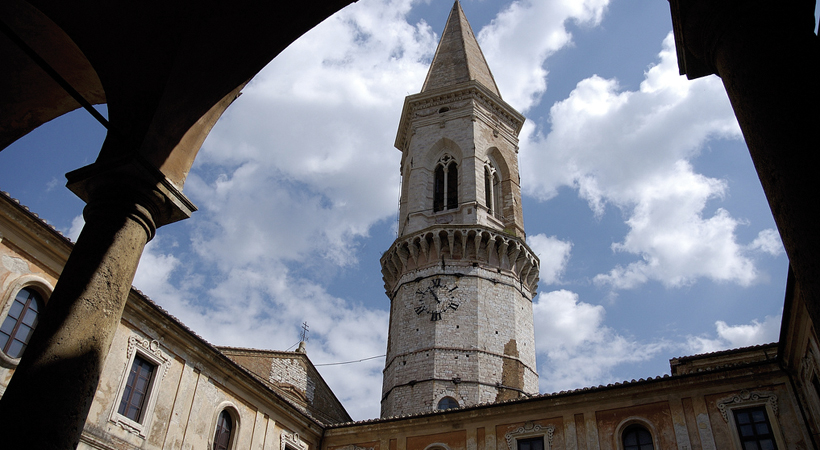
La sacrestia custodisce cinque comparti di predella della grande pala d’altare dell’Ascensione di Cristo del Perugino. Il campanile sorge sulla base del preesistente mausoleo romano e il suo assetto attuale, si deve alla ricostruzione del XV sec. su disegno di Bernardo Rossellino.
Il complesso, di proprietà della Fondazione per l’Istruzione Agraria, è composto da 3 chiostri che conducono all’orto botanico e all’orto medievale, alla Galleria Tesori d’Arte, alla biblioteca e all’archivio, dove sono custoditi libri, codici e manoscritti antichi.
_________________________________
The Benedictine complex of San Pietro, founded in 966 by the Abbot Pietro, rises up where the old cathedral was located in the VI Century, in an Etruscan and Roman sacred area. The Cathedral plan of three naves is from the X Century.
The façade preserves XIV Century frescos, including a rare three-faced Trinity. The interior discloses columns with ancient Ionic capitals, guilded wooden lacunar ceiling and paintings and sculptures dating from the XV to the XIX Centuries. Among them, works by Perugino and by Vasari and canvases of the central nave and the counter-façade with scenes of the life of Jesus, from the Old and New Testament and the triumph of the Benedictine Order, painted by Antonio Vassilacchis, known as Aliense (1592-94).
The choir and side naves contain frescoes painted in the late Mannerist style and the wooden choir is of Lombard school. From underneath the apse, a passage leads to the early medieval crypt: it has a circular floor plan and holds an interesting ambulatory and walls plastered and painted with geometrical and figurative motifs. The sacristy houses five altar-step of the Ascension of Christ by Perugino. The campanile rises up from the base of the old roman mausoleum and its present structure is due to the reconstruction during the XV Century following the project by Bernardo Rossellino.
The complex is property of Fondazione per l’Istruzione Agraria and it has three cloisters leading to the botanic garden and medieval garden, to the Tesori d’Arte Gallery, to the library and archive, where are preserved books, codes and ancient manuscripts.
Galleria di immagini

Luoghi collegati
Modalità di accesso
Accessibile a persone con disabitilità motoria
______________________________
Wheelchair accessible
Dove
Indirizzo
CAP
Orari di apertura
Per orari e costi consulta i contatti che trovi su ulteriori informazioni
______________________________
For opening hours and entrance fees see the contact in ulteriori informazioni
Contatti
Ulteriori informazioni
Info
Fondazione per l’Istruzione Agraria in Perugia, +39 075 33753 – +39 328 6013446
info@fiapg.it
www.fondazioneagraria.it