Isola San Lorenzo – San Lorenzo “Island”
È un complesso monumentale che comprende la Perugia Sotterranea, il Museo del Capitolo e la Cattedrale di San Lorenzo
Monumental complex including Perugia Underground, the Chapter Museum and the Cathedral of San Lorenzo.
Descrizione
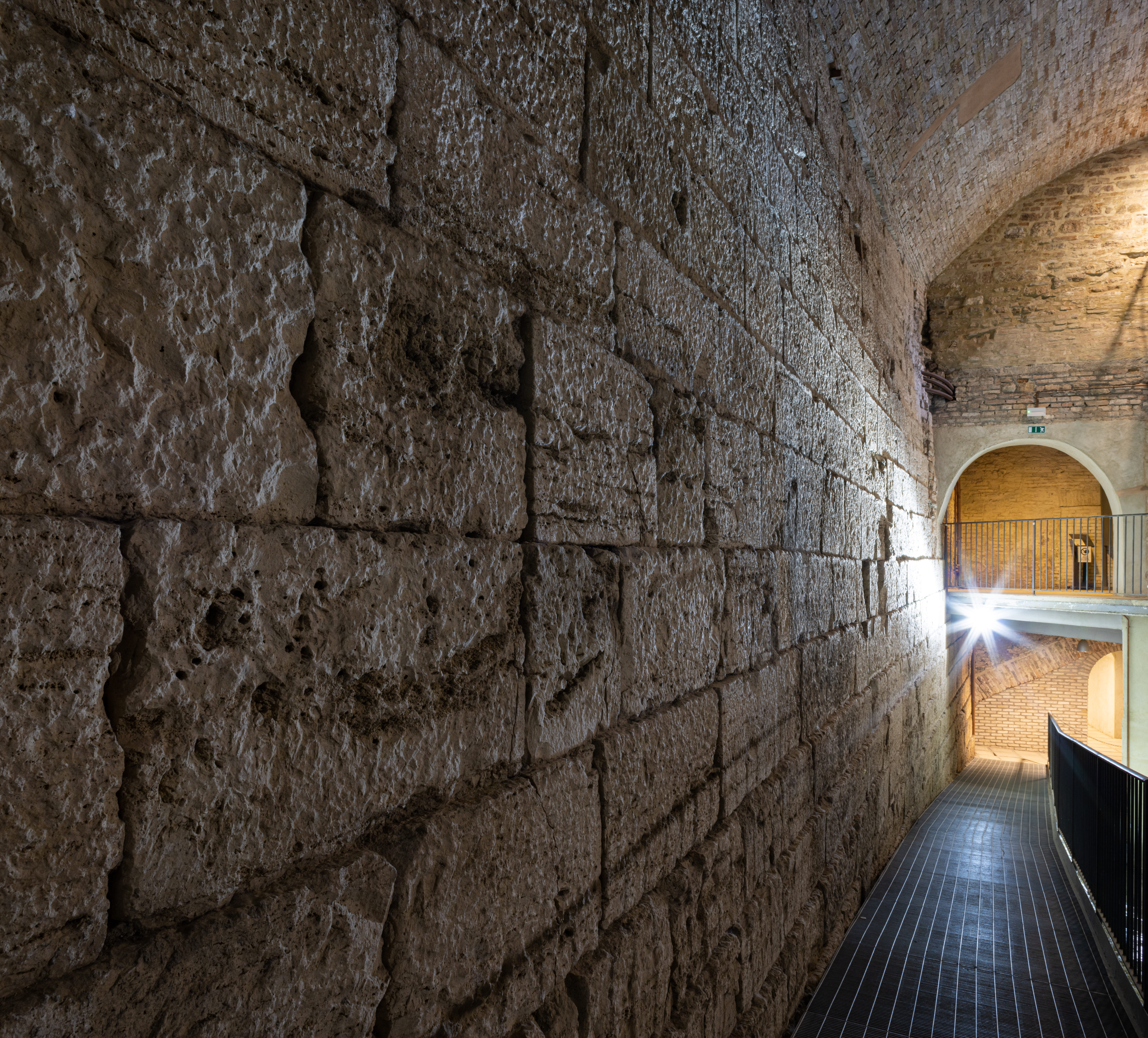
Perugia Sotterranea è il cuore di una città “immersa”, un’area archeologica dove è possibile fare un viaggio attraverso i secoli e visitare una strada etrusco-romana, una domus romana, l’originaria acropoli edificata sopra mura di terrazzamento etrusche e la stratificazione delle fondazioni degli edifici sacri che si sono succeduti nei secoli. Il percorso,si snoda sotto i due chiostri fino a toccare la parte sottostante l’abside della Cattedrale.
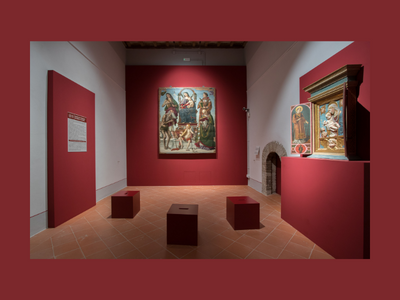
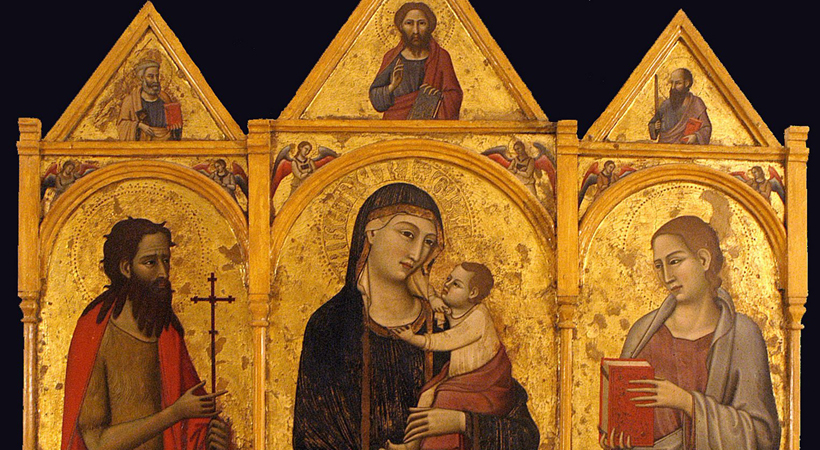
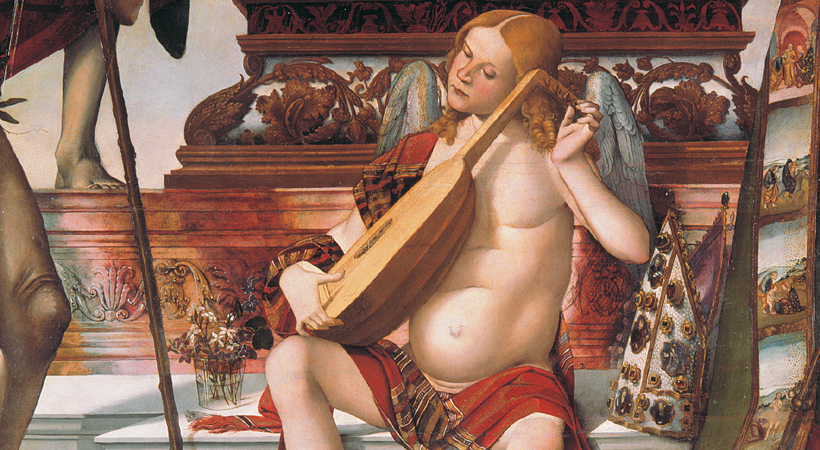
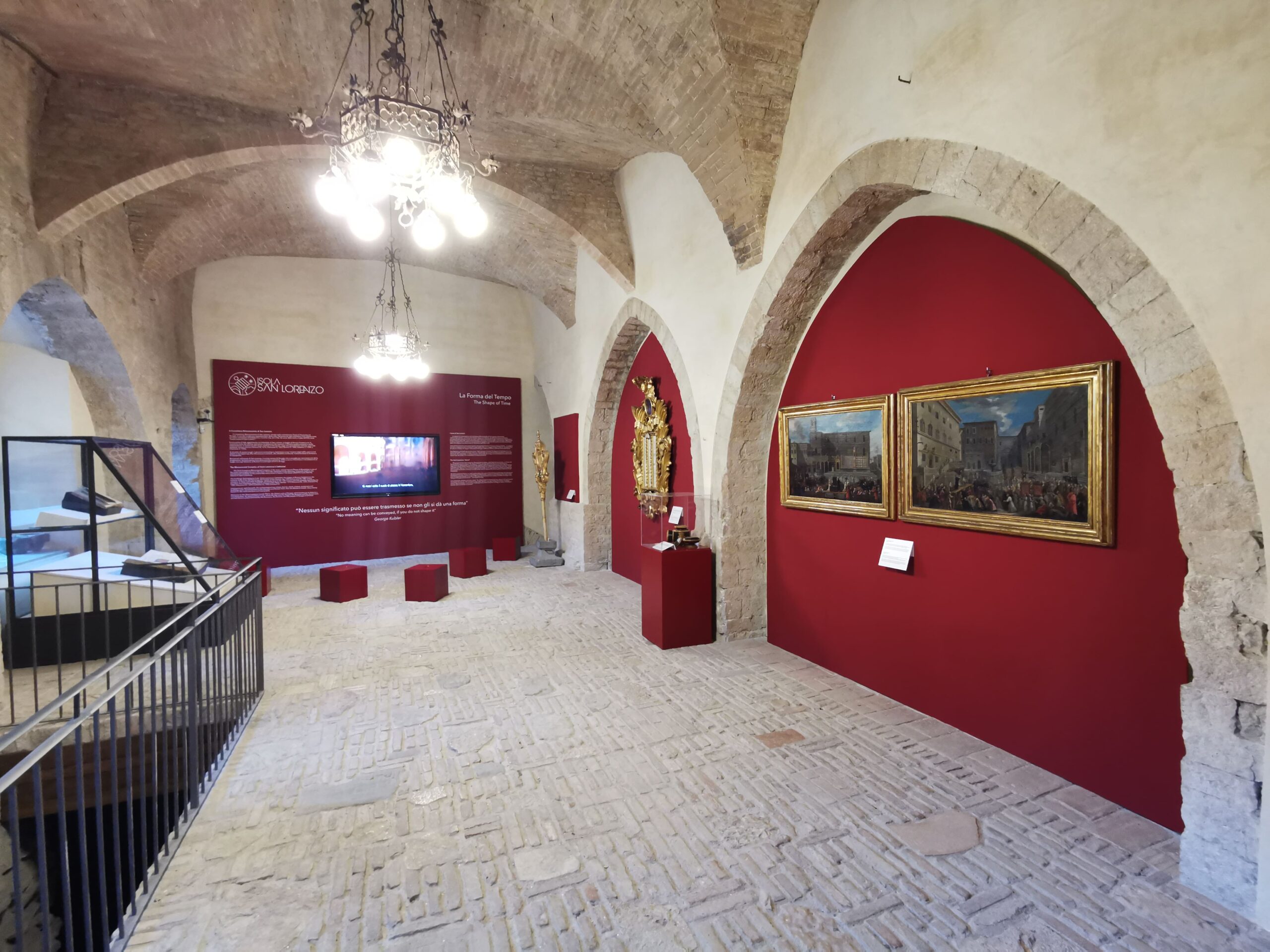
Il Museo del Capitolo fondato nel 1923 è stato completamente riallestito in occasione dei suoi 100 anni di vita. Il nuovo percorso museale segue un criterio tematico raccontando il legame del territorio con la sua Cattedrale, le importanti committenze quattrocentesche in città di Agostino di Duccio e Luca Signorelli, le tradizioni e la devozione popolare attraverso le opere di Bonfigli e Caporali, la presenza dei Papi a Perugia e le vicende del Santo Anello.
La Cattedrale di San Lorenzo si erge nel cuore del centro storico di Perugia. Edificata tre il 1300 e il 1400,ha una struttura slanciata in perfetto stile gotico ed è diviso, da grandi pilastri ottagonali, in tre navate della stessa altezza (Hallenkirche – “chiesa a sala”). L’aspetto quattrocentesco è andato praticamente perduto, a causa dei numerosi rifacimenti che si sono succeduti nei secoli. In uno dei pilastri al centro della navata si trova il dipinto della Mater Gratiae, oggetto di profonda venerazione da parte dei perugini, datato intorno al 1515 e attribuito a Perugino da alcuni studiosi, mentre da altri al suo allievo Giannicola di Paolo. Nella Cappella di San Giuseppe è conservato il “Santo Anello” un monile del 1° secolo d.C. che la tradizione racconta essere l’anello nuziale di San Giuseppe e della Vergine Maria.
______________________________
Underground Perugia is the very heart of an “immersed” city, an archaeological area where a real Travel in time through centuries is possible, seeing an Etruscan/Roman road, a Roman domus, the original acropolis built on top of the Etruscan walls and the layers of the foundations of the sacred buildings that have followed in time. The path is about one km long under two cloisters getting to the area under the Abs of the Cathedral.
The Museo del Capitolo (Chapter Museum) founded in 1923 has gone a total renovation for its 100 years of age. The new Museum itinerary follow a thematic criterion telling the link of the territory with its Cathedral, the important XV Century commissions of Agostino di Duccio and Luca Signorelli, the popular tradition and devotion through the art works of Bonfigli and Caporali, the presence of the Popes in Perugia and all the vicissitudes of the Santo Anello (Holy Ring). Each room tells a tale linked to the art works there, to their artists, theirs time and contest, meeting and talking with the contemporary man.
The Cattedrale of San Lorenzo is right in the heart of the historic centre of Perugia. Built between 1300 and 1400, outside shows a coating with local white and red stone, but only along the inferior facade of the building, as the remaining part of the coating was never finished. The Dome inside has a slender figure in pure Gothic style and is divided in three naves of same Hight by huge octagonal pillars (Hallenkirche – “hall church”). The XV century aspect has been almost totally lost, due to the numerous refurbishments along the centuries. In one of the pillars in the centre of the nave the painting of the Mater Gratiae, object of deep worship for the people of Perugia, from about 1515 and attributed, by some scholars, to Perugino, to one of his pupils, Giannicola di Paolo, by others. In the Cappella di San Giuseppe is the “Santo Anello” (Holy Ring), a jewel of the I Century that tradition says to be the nuptial ring of St Joseph and the Virgin Mary.
Galleria di immagini
Modalità di accesso
Parzialmente accessibile a persone con disabilità motoria
______________________________
Partly wheelchair accessible
Dove
Indirizzo
CAP
Orari di apertura
Per orari e costi consulta i contatti che trovi su ulteriori informazioni
______________________________
For opening hours and entrance fees see the contact in ulteriori informazioni
Contatti
Ulteriori informazioni
Info
Per informazioni e prenotazioni: +39 075 5724853
info@secretumbria.it
www.secretumbria.it/perugia-sotterranea-scavi-archeologici/