Teatro della Sapienza – Theatre of Knowledge
Il teatro dell’attuale educandato femminile O.N.A.O.S.I.
The present Female Boarding School O.N.A.O.S.I. Theatre
Descrizione
Un primo spazio teatrale, risalente al 1362 destinato ad accogliere le attività culturali del collegio della Sapienza Vecchia, era situato in una vasta sala con volte a crociera.
Nella seconda metà del ‘700, ebbe il nome di “Teatro Nazionale dell’Accademia di Belle Lettere ed Arti”, e fino al periodo pre napoleonico (1798) ospitò numerose compagnie girovaghe italiane e straniere; si dice che qui abbia recitato anche il giovane Goldoni.
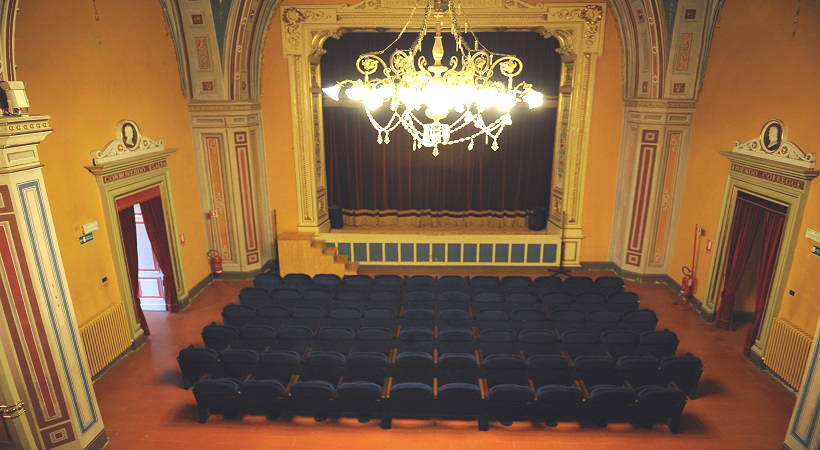
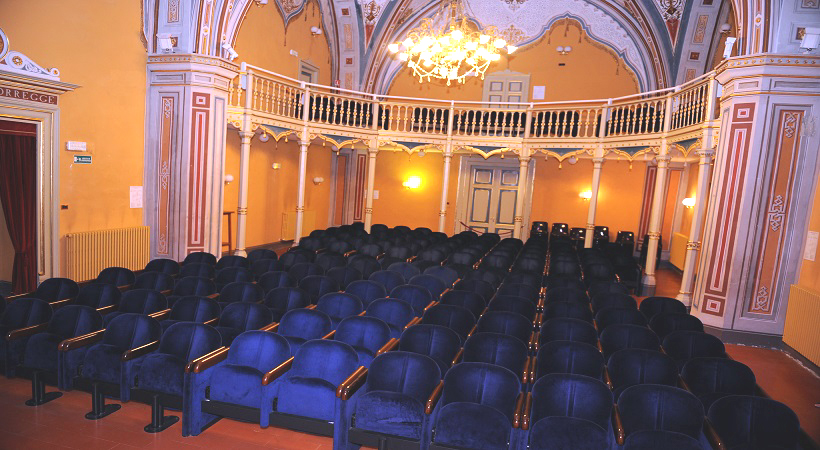
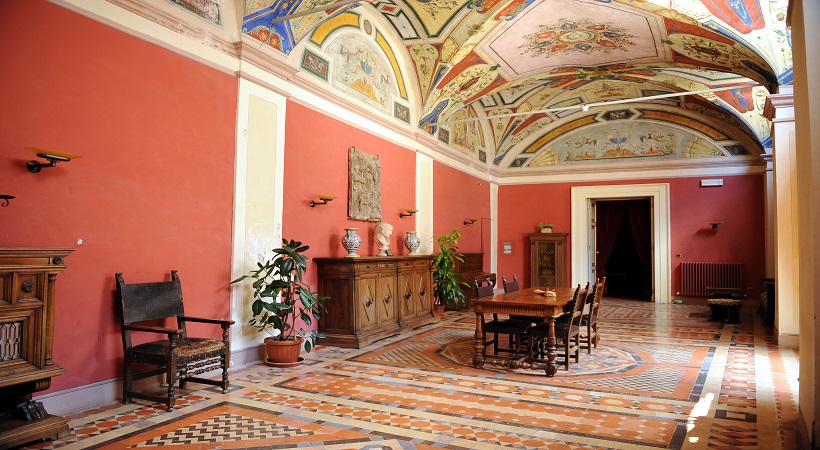
In seguito alla ristrutturazione ottocentesca dell’edificio, il teatro venne ricostruito in stile neogotico nell’ala nuova del complesso. Oggi appare come una sala medioevale, suddivisa in due campate con volte a crociera costolate. L’apparato scenotecnico riproduce, in dimensioni ridotte, la tipologia di grandi teatri lirici come la Scala di Milano. Un elegante loggione-galleria circonda metà platea. La decorazione della sala principale e della contigua sala Rossa fu realizzata dai pittori perugini L. Rossi Scotti e M. Tassi.
Negli ultimi anni del ‘900, il teatro è stato restaurato e riaperto al pubblico.
__________________________
A first theatre, dating back to 1362, was already exhisting in a huge cross shaped vaults room, with the aim of hosting cultural activities of the “collegio della Sapienza Vecchia” (College of Old Knowledge).
In the second half of the XVIII Century that theatre was called “Teatro Nazionale dell’Accademia di Belle Lettere ed Arti” (National Theatre of the Academy of fine Arts and Literature). Until the pre-Napoleonic period (1798) it hosts several wondering companies both Italian and Foreigners; they say that also the young Goldoni acted here.
Following the XIX Century reconstruction of the building, the new wing of the complex was rebuilt in Neo Gothic Style. Today it looks like a medieval room divided into two cross vaulted naves. The stage craft apparatus reproduces, in reduced dimensions, the typical opera theatre, like the “Alla Scala” in Milan. An elegant upper gallery surrounds half of the stalls. The most famous names of Perugia were called for the decoration of the main room and the Red Room: L. Rossi Scotti and M. Tassi who painted nice eclectic decorations.
In the last years of the XX Century, the theatre has been repaired and newly open to the public.
Galleria di immagini
Modalità di accesso
Accessibile a persone con disabitilità motoria
__________________________
Wheelchair accessible
Dove
Indirizzo
CAP
Contatti
Ulteriori informazioni
Info
Info: tel. +39 075 5869400 (ONAOSI)