Sala dei Notari – Notari Hall
Il cuore della vita istituzionale
The heart of the institutional life.
Descrizione
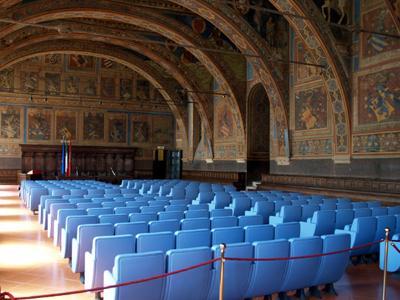
La Sala dei Notari, originariamente destinata alle assemblee popolari del libero comune, è una grande sala rettangolare sostenuta da otto poderosi arconi. Dopo il 1582 diventò sede della potente Arte dei Notai, da cui il nome attuale.
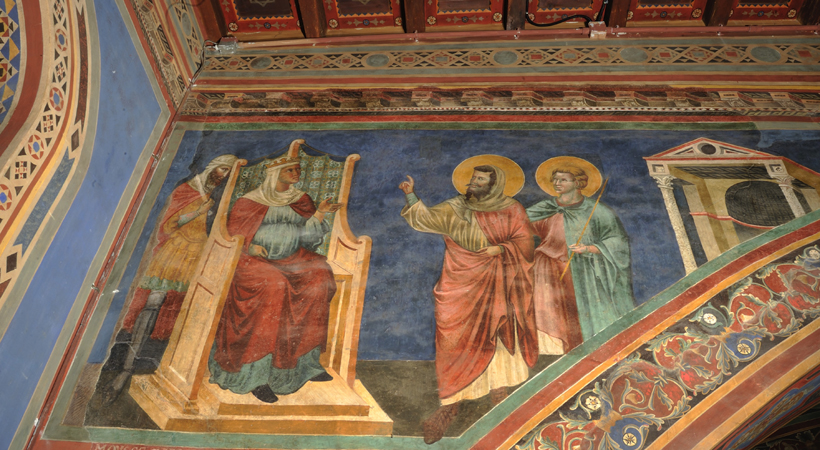
Degli affreschi originari del XIII-XIV Sec. restano pochi brani. Le pareti della Sala risultano ridipinte o integrate da Matteo Tassi (1885) con leggende, favole e storie bibliche affiancate da vari stemmi tra cui quelli di capitani del popolo e podestà. Al Centro della parete di fondo campeggia lo stemma di Braccio Fortebraccio. Lungo il perimetro si allineano stalli e sedili, ricostruiti nel XIX secolo sui modelli originali cinquecenteschi.
Profondamente alterata durante i tre secoli del dominio pontificio, venne restaurata e ripristinata dopo il 1860.
______________________________
The Sala dei Notari is a magnificent rectangular hall supported by eight large arches, originally used for the people’s assemblies during the Free Commune. After 1582, it became seat of the powerful “Arte dei Notai” association, from which it takes its present name.
Only a few fragments remain of the original XIII-XIV Century frescoes. Most have been painted over or incorporated into the legends, tales, bible stories and coats of arms, including those of the Captains of the People and the Podestà by Matteo Tassi (1885). On the back wall stands out the coat of arms of Braccio Fortebraccio (One of the most important Lord of Perugia in the XV and XVI Century), while along the side walls are stalls and seats, rebuilt after XVI Century fashion.
Totally altered during three centuries of Papal rule, it was restored to its original state after 1860.
Galleria di immagini

Modalità di accesso
Accessibile a persone con disabilità motoria
______________________________
Wheelchair accessible
Dove
Indirizzo
CAP
Orari di apertura
da lunedì a domenica 9.00-13.00; 15.00-19.00
Chiuso in occasione di manifestazioni (concerti, convegni, ecc.)
______________________________
Mondays to Sundays h. 9:00 am – 1:00 pm; 3:00 pm – 7:00 pm
Closed if there are concerts or happenings in general