Porta Santa Susanna – Gate of Santa Susanna
La porta si apre nelle mura medievali, con più esattezza nella cinta ovest
The gate belongs to the western section of the medieval walls
Descrizione
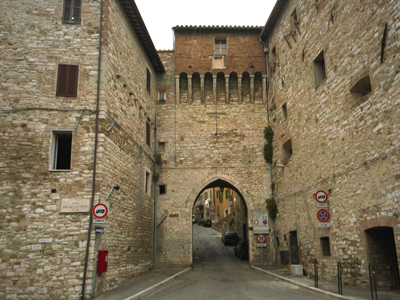
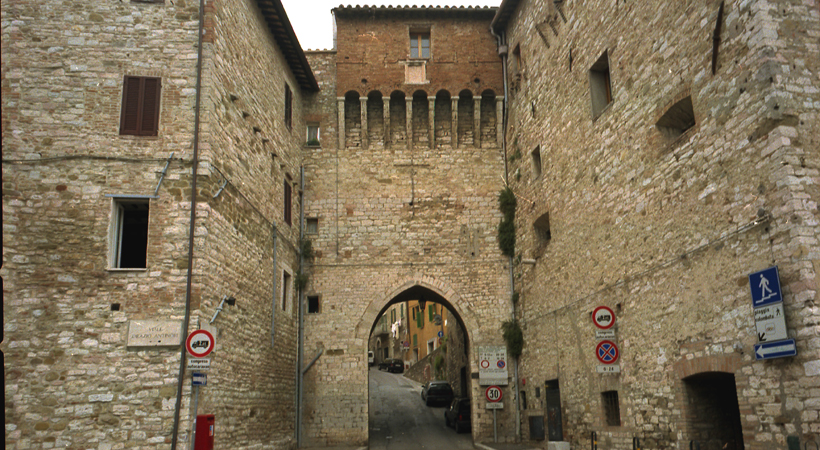
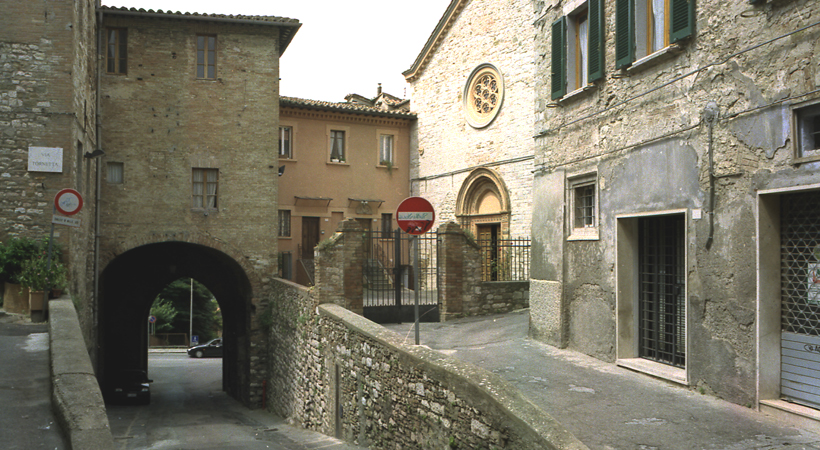
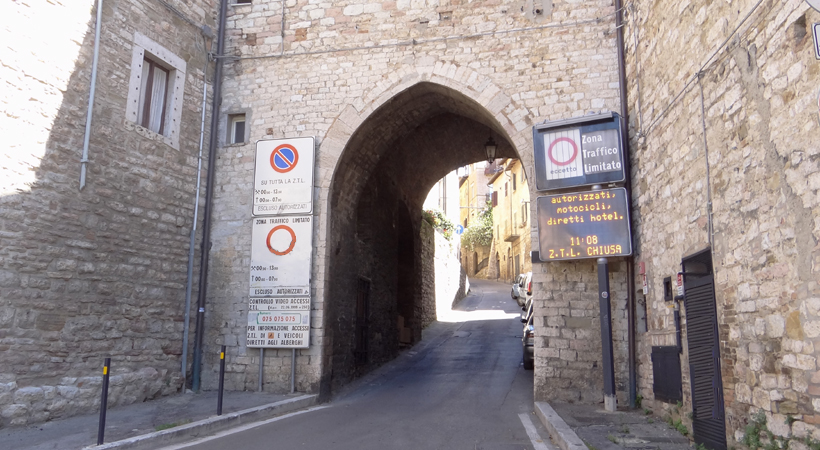
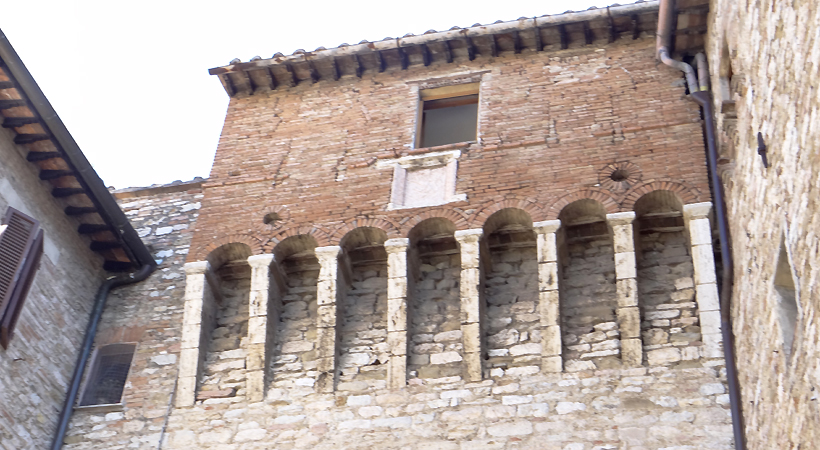
Prende nome dall’antichissima chiesa di Santa Susanna, divenuta cripta di San Francesco al Prato (chiusa nel XIV sec. e utilizzata come sepolcreto). E’ conosciuta anche con il nome di Porta di Sant’Andrea e della Colombata come le omonime chiese vicine. Databile attorno al XIII – XIV sec. e demolita in parte nel corso del ‘900. I resti di una piccola sezione si trovano nel sottopassaggio delle scale mobili di Viale P. Pellini. La facciata esterna presenta un arco ogivale, mentre più tarda è la soprelevazione in mattoni con beccatelli e la decorazione scultorea del grifo in pietra rosa.La strada che l’attraversa è una delle più antiche vie di collegamento con il lago Trasimeno e la Toscana, una delle cinque vie regali provenienti dalla Platea Magna. I simboli del rione e della porta, oltre alla Santa stessa sono: l’orso, simbolo antico, e la catena. Il colore è l’azzurro, probabilmente in relazione alle acque del lago Trasimeno.
______________________________
It is named after the ancient Santa Susanna church, afterwards San Francesco al Prato crypt (closed in the XIV sepulchre). It is also known as “Porta di S. Andrea” and “della Colombata” as the near churches.
The gate belongs to the western section of the medieval walls (XIII – XIV Century), partially demolished during the XX Century of which a segment is visible in the underpass of the Viale P. Pellini escalators. The external façade has a pointed arch, whereas the raised part in bricks with brackets and the pink-stone griffin decoration are of the following period.
The street that passes across the gate is one of the ancient streets towards the Trasimeno Lake and Tuscany, one of the five Royal Streets coming from the Platea Magna. The symbols of the district and gate are the bear, ancient symbol, and the chain. The colour of the district is blue, probably for the water of the Trasimeno Lake.
Galleria di immagini
Modalità di accesso
Luogo all’aperto accessibile a persone con disabilità motoria
______________________________
Open air place, wheelchair accessible