Porta Cornea o di Sant’Ercolano – Cornea Gate or of Sant’Ercolano
Si apre nella cinta muraria etrusca (III sec. a.C.), prende nome dalla chiesa vicina di S. Ercolano. E’ detta Cornea ovvero di corno
It belongs to the Etruscan City Walls (III century B.C.) It is also named after S. Ercolano like the nerby church
Descrizione
Si apre nella cinta muraria etrusca (III sec. a.C.), è orientata verso sud e prende nome dalla chiesa vicina di S. Ercolano.
E’ detta Cornea ovvero di corno.
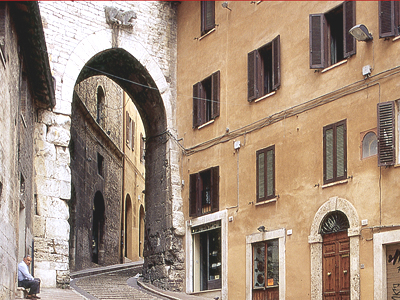
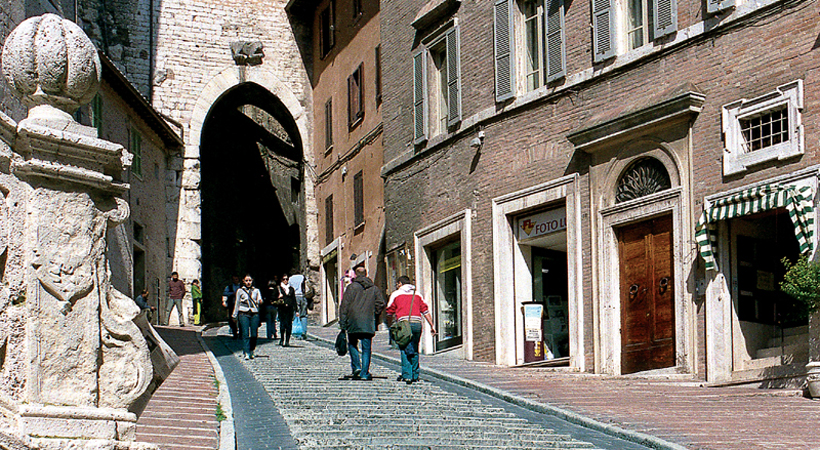
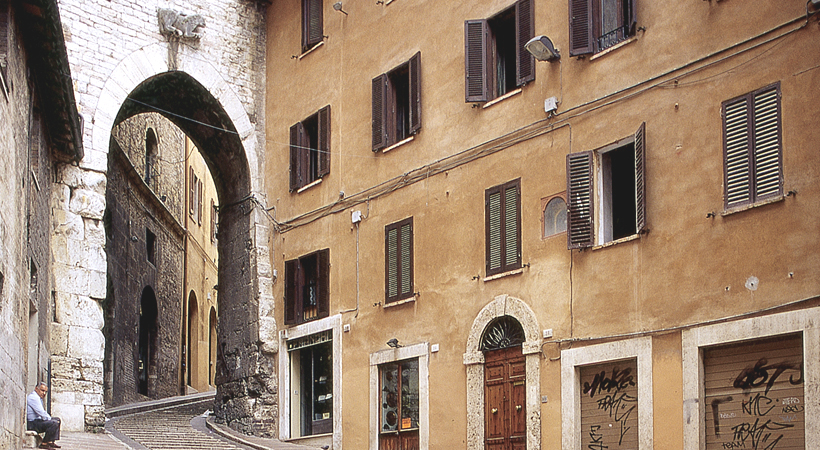
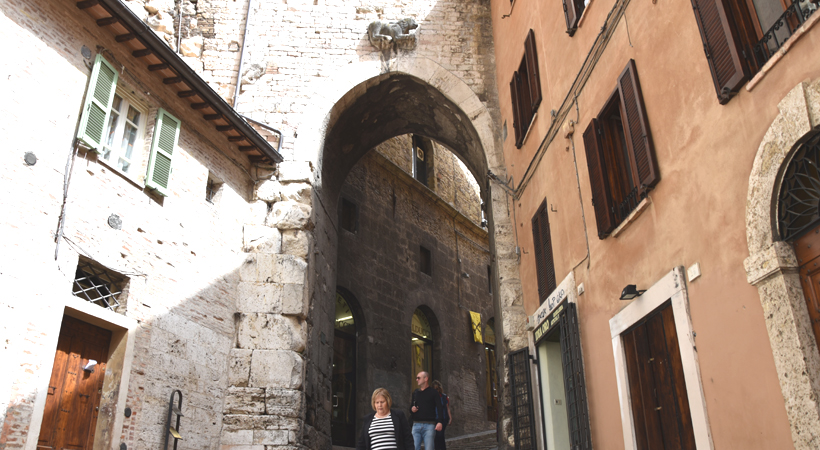
E’ conosciuta anche con i nomi di Berarda o di Comitoli, per la vicinanza delle abitazioni di Messer Berardo (XIV sec.) e successivamente del Vescovo Napoleone Comitoli (XVII sec.).Come molte porte etrusche conserva alla base la struttura originaria, mentre l’arco è a sesto acuto. Sopra all’arco nella facciata esterna è un leone del XIII sec., collocato come emblema della fazione guelfa e al contempo simbolo di vigilanza e protezione. La scalinata sottostante un tempo era una piaggia, ovvero un pendio, attraverso il quale i carri accedevano ai mercati cittadini.La porta fa parte del Rione di Porta San Pietro, il cui stemma sono le chiavi incrociate, simbolo del Santo. Il colore associato è il giallo oro, come il grano che proveniva dalla pianura del Tevere, passando da questa porta rivolta a sud-est.
______________________________
It belongs to the Etruscan City Walls (III century B.C.) South-oriented, it is also named after S. Ercolano like the nearby Church. Also known as Cornea (made of horne)- It is known as “Berarda” or “di Comitoli” because of the nearby residences of Lord Berardo (XIV century) and the bishop Napoleone Comitoli (XVII century).
As many other Etruscan doors it conserves the original base, while the arch was replaced by a pointed one. In the exterior of the façade above the arch, a lion of the XIII century, symbol of of the “Guelfi” (the Pope supporters between the XII and XIV centuries) but also a vigilance and protection icon. The underlying steps were a slope from where the wagons entered the city markets.
This gate is in the Porta San Pietro District, which has the crossed gilded keys as symbol of San Pietro. The background colour is gold, like the wheat coming from the plain of the Tiber river, passing through the South-East oriented door.
Galleria di immagini
Modalità di accesso
Luogo all’aperto, non accessibile a persone con disabilità motoria
______________________________
Open air place, not wheelchair accessible