Parco della Cupa – Cupa Park
Sorta negli anni ’50 grazie al noto architetto-paesaggista toscano Pietro Porcinai che ne curò la sistemazione
From the '50s of las Century by the Architect Pietro Porcinai who curated its organization
Descrizione
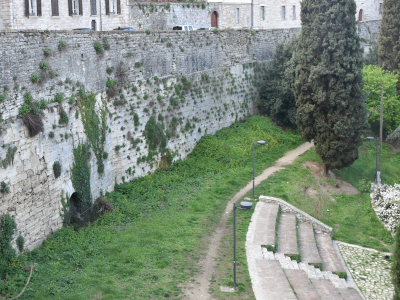
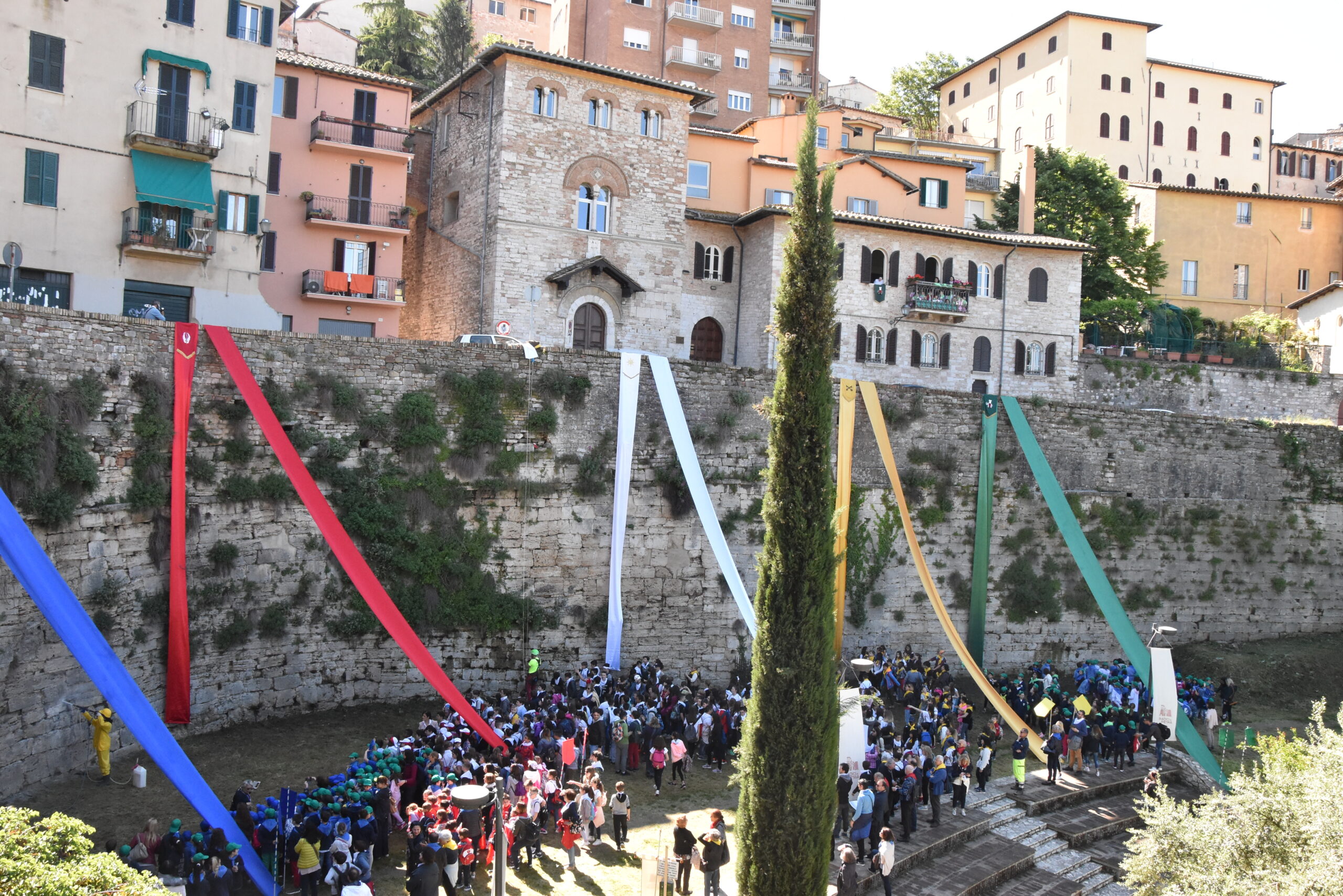
Si sviluppa nel fosso della Cupa che delimita il confine tra i rioni di Porta Eburnea e di Porta Santa Susanna. L’area è sottostante il poderoso muro urbico etrusco, in blocchi di travertino, del III secolo a.C.; il ripidissimo pendio di questo versante (colmato solo in parte solo dalla risistemazione della seconda metà del Novecento) ha fatto coincidere in questo unico punto della città il muro medievale con quello etrusco, comunque distinti dalla diversa pezzatura delle pietre utilizzate nella parte sommitale (medievale). Incastonato tra i blocchi più bassi un passaggio secondario “la postierla” (piccolo varco riservato ai pedoni), coeva al muro etrusco.
All’epoca della sua strutturazione il giardino era parte della mobilità urbana quale percorso nel verde per raggiungere il centro storico; nel tempo è stato poi in larga parte abbandonato per la realizzazione di percorsi meccanizzati, di più facile utilizzo, nei rioni contigui. Negli anni Cinquanta e Sessanta il parco divenne la ‘spiaggia’ dei perugini. Di recente strutturazione una zona con un apiario, realizzato in un’area delimitata e lontana dalle vie di percorrenza ed un’area cani.
Dalla soprastante via della Cupa la vista abbraccia un ampio tratto dei quartieri moderni; sulla destra, nella città antica, quasi incastonata nelle mura etrusche si riconosce, per l’inusuale abside pensile in pietra bianca, la chiesa di S. Benedetto.
______________________________
It develops along the “fosso della Cupa” – bordering the two city districts of Porta Eburnea and Porta Santa Susanna, It is located under the mighty Etruscan Wall, built with travertine stones during the III Century B.C.; the very deep slope of this side (only in part paired in the second half of the XX Century) made the Etruscan Walls here to coincide with the medieval one, even if easily distinguishable from one another from the size of the stone used in the upper part (the mediaeval one).Enclosed in the inferior parts is the “postierla”(little pedestrian entrance) of the Etruscan walls.
At the time of the reconstruction the garden was part of the urban mobility as green itinerary toward the city centre; later on, it has been neglected because of the making of the mechanics steps, of much easier use. During the ‘50s and ‘60s the park became the “breach” of the people Perugia. Recently it was established a new area, on a limited place far from the houses, for bees and beehives, and a walking dogs’ area.
From the above Via della Cupa there’s a nice view embracing a wide part of the modern city; on the right, in the ancient city, almost set in the Etruscan walls, it can be easily seen, because of its unusual hanging abs of white stone, the Church of S. Benedetto.
Galleria di immagini
Modalità di accesso
Luogo all’aperto, non accessibile a persone con disabilità motoria
______________________________
Open air place, not wheelchair accessible