Ipogeo dei Volumni, Antiquarium e Necropoli del Palazzone – Volumni Hypogeum, Antiquarium and Palazzone Necropolis
La tomba etrusca conosciuta in tutto il mondo
The Etruscan tomb known worldwide
Descrizione
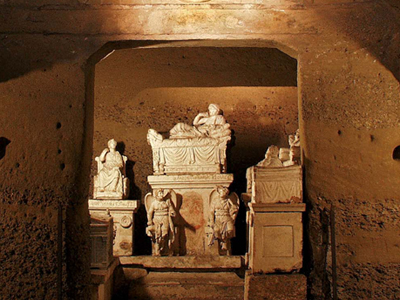
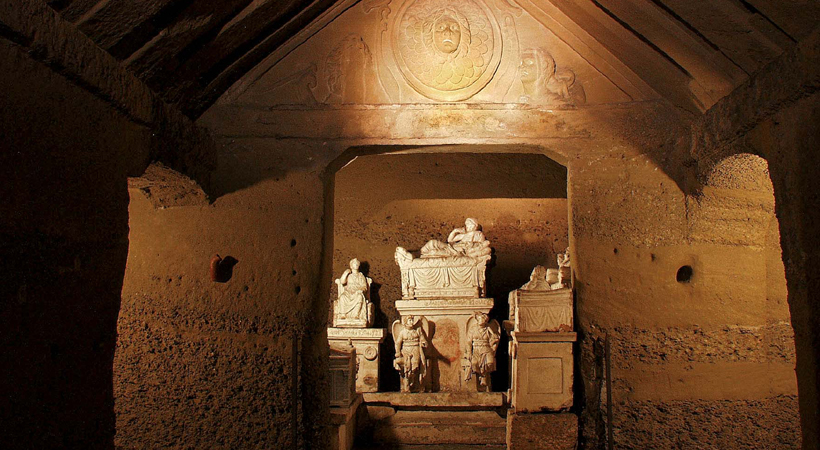
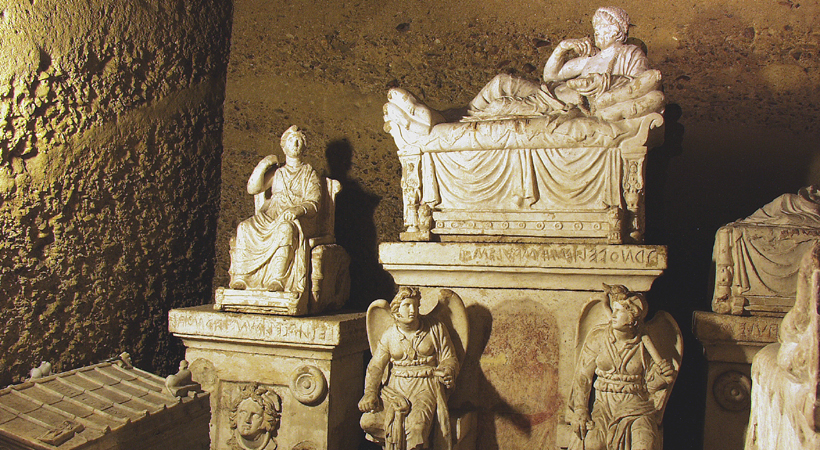
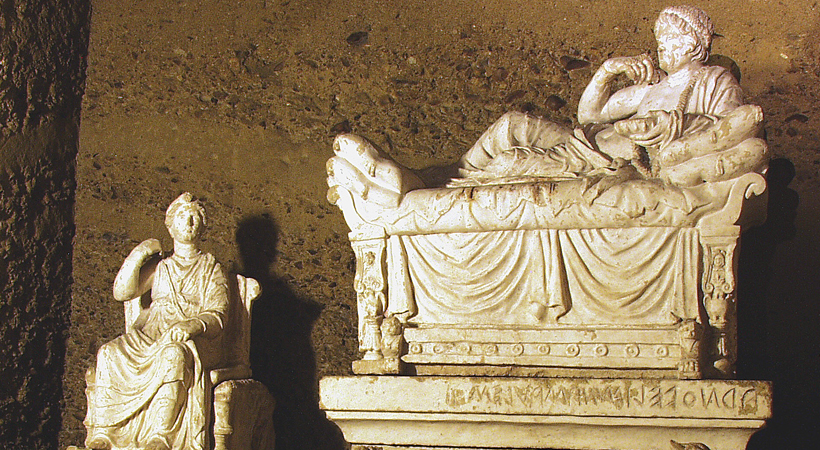
L’Ipogeo dei Volumni (III sec. a.C. – I sec .d.C.) fa parte della vasta necropoli etrusca del Palazzone, scoperta nell’Ottocento e interamente portata alla luce dal 1963.
La necropoli è costituita da quasi duecento tombe a camera scavate nel terreno databili dal V sec. a.C. all’età ellenistica. All’ingresso della monumentale tomba dei Volumni sono conservate urne cinerarie di travertino, terracotta, marmo e arenaria provenienti dalla Necropoli.
Un ripido e grandioso dromos (corridoio) di accesso conduce alla camera sepolcrale di Arunte e Lars Volumnio; la tomba è suddivisa secondo lo schema planimetrico della casa romano-italica, con le stanze attorno all’atrio centrale.
______________________________
The Ipogeo dei Volumni (III Century B.C. – I Century A.D.) is part of the vast Palazzone necropolis, discovered in the XIX Century and dug out completely starting from 1963.
The necropolis is made up of almost two hundred chamber tombs dug into the ground that could be dated back from the V Century B.C. to the Hellenic period. Several cinerary urns in travertine, earthenware, marble and sandstone of the necropolis are preserved at the entrance of the Volumni monumental tomb.
A steep and grandious entrance dromos (corridor) leads to the burial chamber of Arunte and Lars Volumnio; the tomb is built in the architectural style of a Roman house with the rooms opening into the central atrium.
Galleria di immagini
Modalità di accesso
Parzialmente accessibile a persone con disabilità motoria
______________________________
Partly wheelchair accessible
Dove
Indirizzo
CAP
Orari di apertura
Per orari e costi consulta i contatti che trovi su ulteriori informazioni
______________________________
For opening hours and entrance fees see the contact in ulteriori informazioni