Complesso templare di San Bevignate – Templar Complex of San Bevignate
Sorge nei pressi del cimitero monumentale di Monteluce; importante testimonianza della presenza templare a Perugia, dal 1237
Close to the Monumental Cemitery of Monteluce, it is an important testimony of the templar presence in Perugia, since 1237.
Descrizione
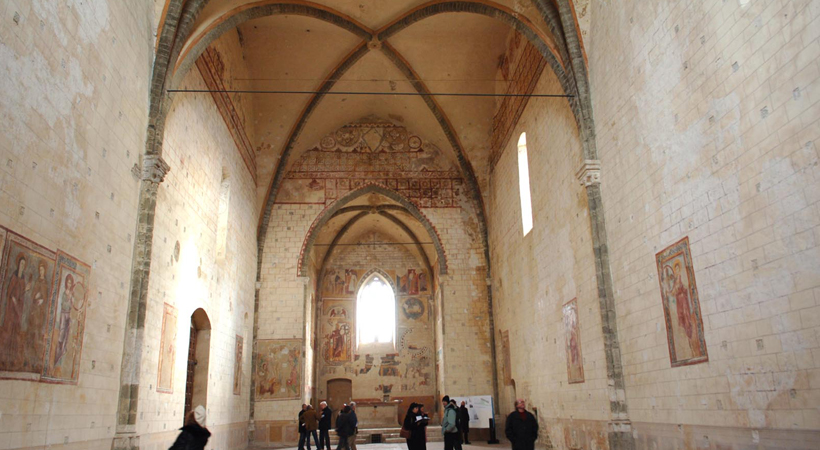
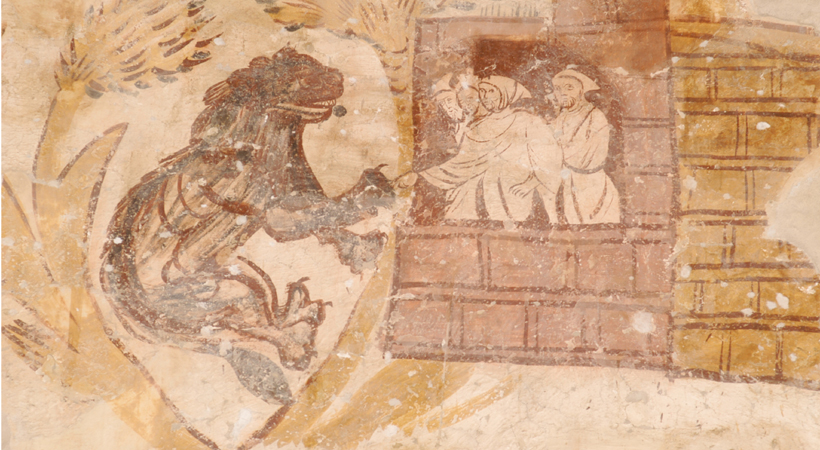
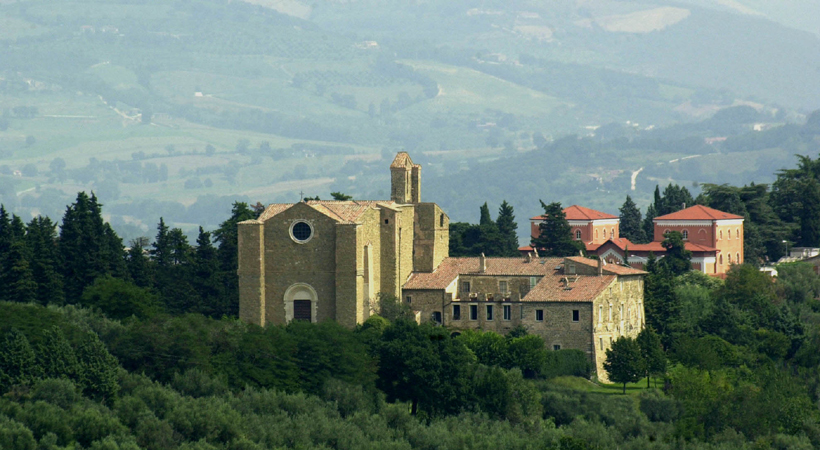
La chiesa di San Bevignate è una delle testimonianze monumentali più significative e meglio conservate tra i complessi dei cavalieri templari, l’Ordine creato a Gerusalemme intorno al 1119 dal cavaliere francese Ugo di Payns, radicatosi poi in tutta Europa. All’esterno la struttura si presenta sobria e possente, mentre l’interno è alleggerito da un gioco di slanciati costoloni. Le decorazioni parietali, tra i pochi esempi di pittura duecentesca a Perugia, recano traccia della storia dell’Ordine, inframezzata con personaggi e avvenimenti salienti del Medioevo umbro (da San Bevignate al movimento dei flagellanti). Sulla controfacciata appare un ciclo pittorico relativo alla missione in Terrasanta: un racconto per immagini che ripercorre le gesta della Militia Templi dal viaggio in mare fino alla battaglia di Nablus (1242). L’abside ospita, insieme a scene bibliche destinate alla liturgia e all’educazione del volgo, una splendida rappresentazione del Giudizio Universale, in cui elementi locali e transnazionali si incrociano per restituire l’essenza stessa dell’Ordine che per oltre un secolo ha collegato Oriente e Occidente.
Gli importanti lavori di consolidamento e restauro, avviati in seguito al terremoto del 1997, hanno riportato alla luce, insieme ai resti di un insediamento abitativo, una fullonica (una lavanderia-tintoria) di epoca romana, tra le poche rinvenute in Italia.
Il complesso templare di San Bevignate è stato ufficialmente riaperto al pubblico nel 2009 e rappresenta oggi uno dei cardini del circuito museale comunale; è inoltre uno spazio pubblico di grande fascino e suggestione, destinato ad accogliere iniziative ed eventi culturali di rilievo.
Nel 2017 l’Amministrazione Comunale ha aderito, in qualità di membro attivo, alla Templar Route European Federation, associazione europea che vede tra i suoi membri fondatori la città francese di Troyes del Dipartimento di Aube en Champagne, quella portoghese di Tomar e la spagnola Ponferrada. L’obiettivo principale della TREF è quello di riunire i territori segnati dalla presenza di emergenze monumentali collegabili ai Templari, al fine di realizzare uno specifico itinerario culturale riconosciuto dal Consiglio d’Europa.
______________________________
The church of St. Bevignate is one of the most important and better-preserved monumental testimony among the complexes of the Templar Knights, the Order created in Gerusalem around 1119 by the French knight Hugues de Payns, and after that rooting all over Europe. Outside the structure is sombre and mighty, while inside it is lighted by a game of slender ribs. The wall decorations, among the rare examples of XIII Century paintings in Perugia, show the History of the Order, together with characters and important events in the Umbrian Middle Ages (from San Bevignate to the flagellants). On the counter-façade a pictorial cycle on the mission in the Holy Land: a tale by images telling the actions of the Militia Templi, from the sea voyage to the Nablus battle (1242). In the apse, together with some biblical scenes destined to liturgy and the upbringing of the people, a spectacular depiction of the Last Judgment, in which local elements intermingle with transnational ones, giving out the real essence of the Order that, for over a century, linked East and West.
The important consolidation and restoration work, following the earthquake of 1997, has revealed, together with remains of a settlement, a fullonica (a laundry-dyeing) of roman era, one of the few found in Italy.
The Templar Complex of San Bevignate has been re-opened to the public in 2009 and represent today one of the pivot elements of the municipal museum circuit; it is moreover a public place of extreme fascination and charm, hosting important cultural initiative and events.
In 2017 the Municipality joined, as founding partner, to Templar Route European Federation, European association with city partners as Troyes, French city of the Department de l’Aube en Champagne, the Portuguese Tomar and the Spanish Ponferrada. The main aim of TREF is that of uniting all territories with landmarks linkable to the Templars, in order to establish a specific cultural itinerary, recognized by the European Council.
Galleria di immagini
Modalità di accesso
– gruppi di minimo 10 persone
– Forze armate e Comparto Sicurezza e Difesa
– dipendenti del Ministero della Cultura (MiC) (su presentazione del tesserino)
– dipendenti del Comune di Perugia (su presentazione del badge)
– studenti, dottorandi, ricercatori e docenti di Architettura, Archeologia, Storia dell’arte, Beni Culturali,
Scienze dell’Educazione e altri corsi caratterizzati dalla classe di insegnamento L-ART 01,02, 03 e 04, dei
Conservatori/Accademie di Musica e di Belle Arti (con libretto accademico o altra documentazione che ne
certifichi l’iscrizione)
– possessori del biglietto “Civitas Perusina” (itinerario nelle sale di Palazzo dei Priori, del Nobile Collegio del Cambio, del Nobile Collegio della Mercanzia)
– convenzioni in vigore
– per attività di valorizzazione organizzate/promosse dall’Amministrazione anche in collaborazione con il gestore
– scolaresche di ogni ordine e grado
– convenzioni in vigore
– per attività di valorizzazione organizzate/promosse dall’Amministrazione anche in collaborazione e/o per il tramite del gestore
– insegnanti accompagnatori di scolaresche
– direttori e funzionari di musei pubblici e privati (su presentazione di tesserino o badge)
– dirigenti del Ministero della Cultura (MiC) in servizio
– guide turistiche, con licenza riconosciuta
– disabile e n. 1 accompagnatore
– giornalisti/Pubblicisti (con tesserino dell’Ordine o lettera d’incarico firmata dal Direttore)
– convenzioni in vigore
– per attività di valorizzazione organizzate/promosse dall’Amministrazione anche in collaborazione e/o per il tramite del gestore
Entrance:
€ 6,00
Reduced A: €3,00
18 – 25 years of age, conventions, groups of minimum 10 persons and other
Reduced B: €2,00
7 – 18 years of age, conventions, school groups, other conventions
Free of charge
0 – 6 years of age; school groups attending other museum services (as guided tours), journalists
Combined ticket
for access to the three museum spaces Cappella di San Severo, Civic Museum of Palazzo della Penna and Templar Complex of San Bevignate
Ticket € 14,50
Reduced A € 7,50
Reduced B € 5,00
In the occasion of temporary exhibitions or events the ticket may suffer variations
Guided Tours: € 120 in foreign languages (entrance excluded)
Extraordinary Openings with Guided Tours: € 150 in foreign languages (entrance excluded)
Dove
Indirizzo
CAP
Orari di apertura
April, May, June, July, August, September and October: Saturdays and Sundays h. 10:00 am – h. 1:00 pm / 3:00 pm – 6:00 pm
Contatti
Ulteriori informazioni
Info
Le Macchine Celibi soc. coop.
+39 389 1116152 – +39 075 3745273
www.lemacchinecelibi.coop
info.perugia@lemacchinecelibi.coop
Facebook: www.facebook.com/lemacchinecelibi