Cassero di Porta Sant’Angelo – Keep of S. Angelo Gate
Una delle porte della città
One of the Gates of the City
Descrizione
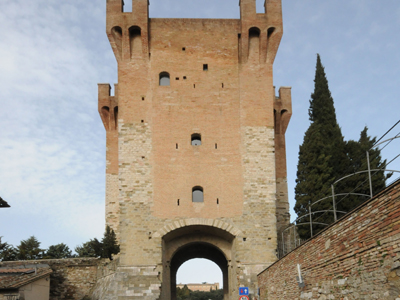
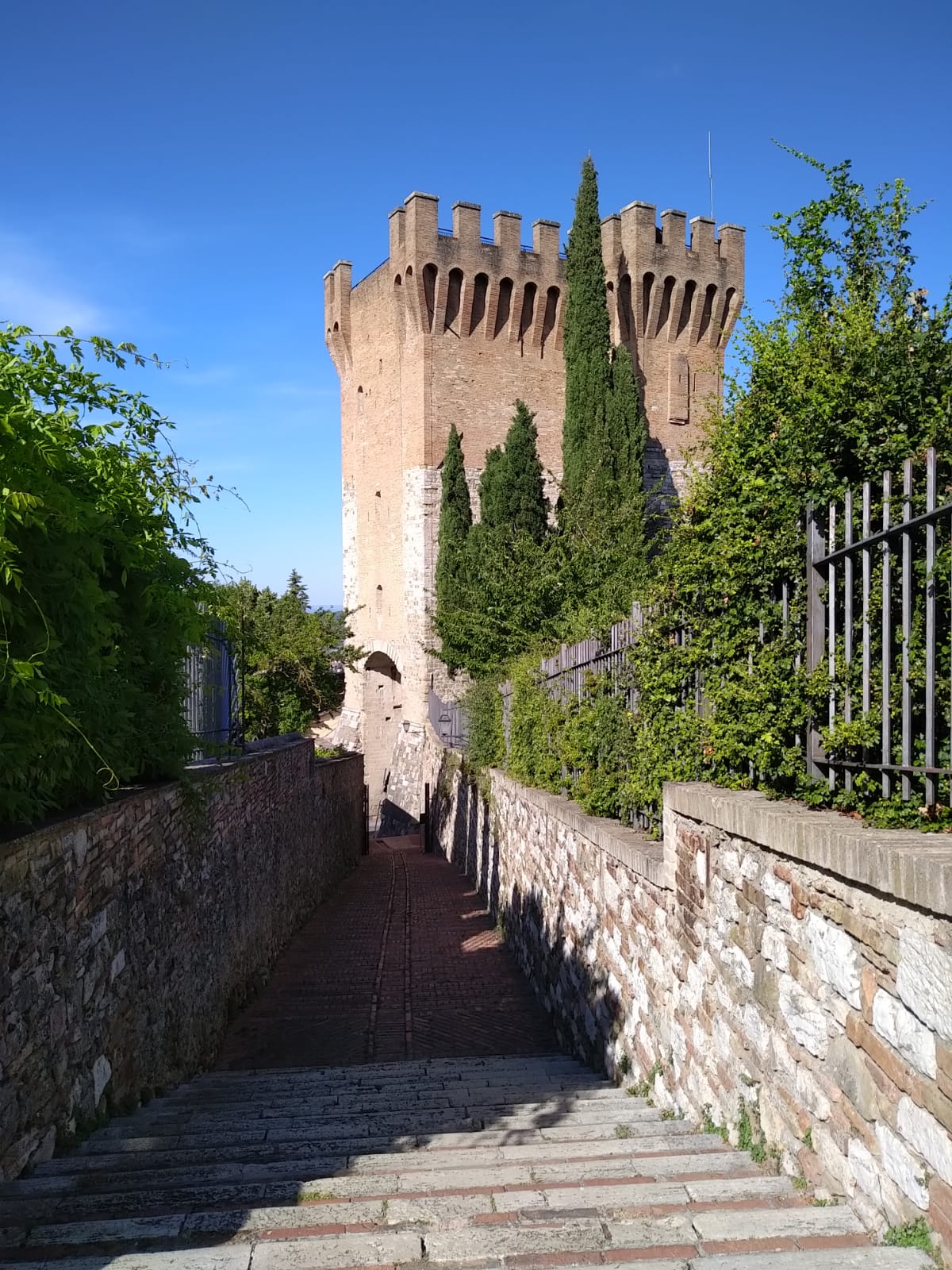
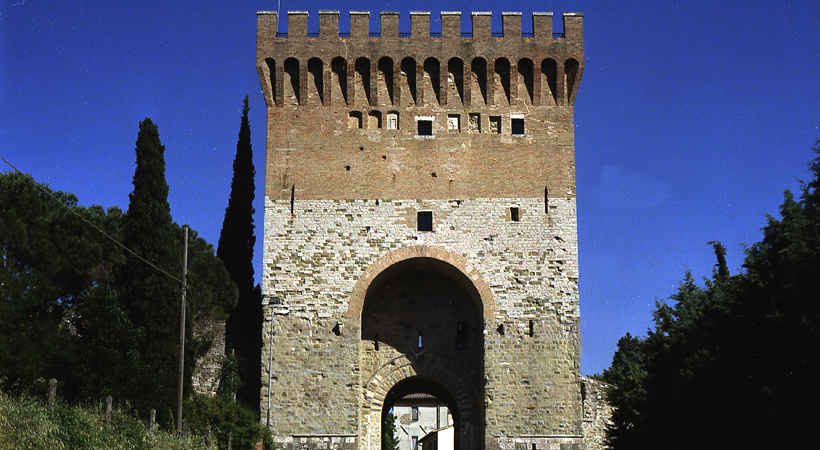
La più grande delle porte medievali, fortificata da Ambrogio Maitani nel 1326, si apre nella cinta muraria del XIV sec.
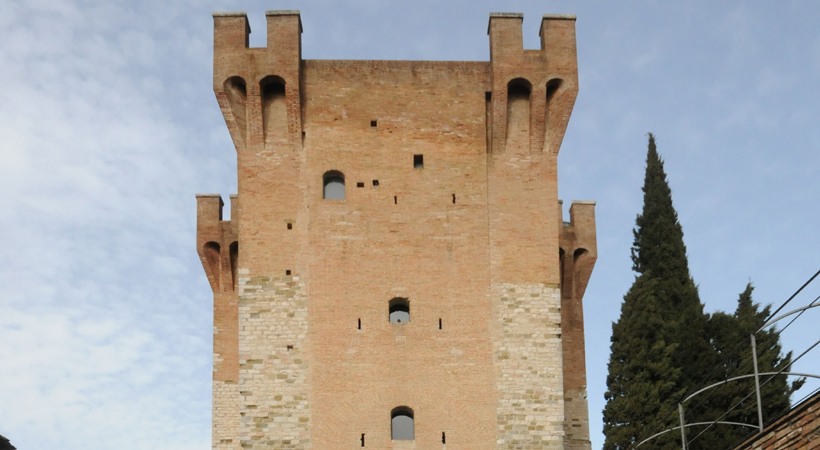
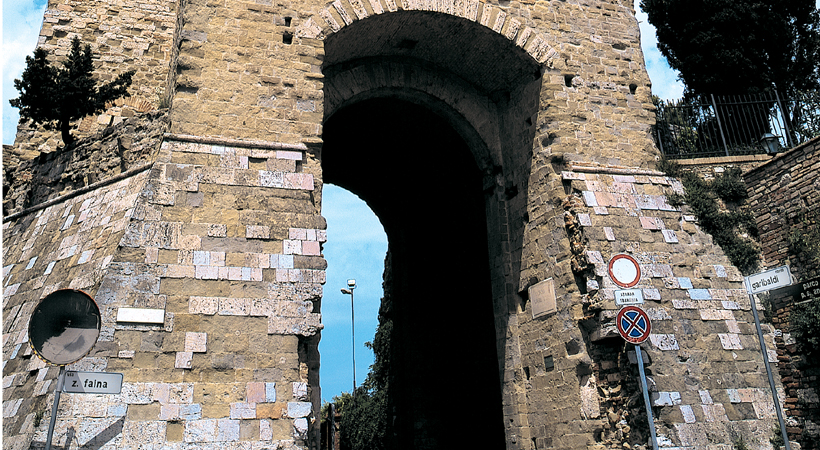
Esternamente presenta tre livelli, corrispondenti a tre fasi costruttive, contraddistinte ciascuna da tre impieghi di materiali edili; il primo livello è in pietra arenaria, come le coeve mura. La sopraelevazione del secondo livello è in pietra calcarea, probabilmente degli anni 70 del XIV sec.; fu voluta dal legato pontificio Gherrado du Puy, Abbate di Montmajeur de Cluny (Abbate di Monmaggiore), che per la posizione strategica del luogo, aveva creato un collegamento con la fortezza di Porta Sole e la Porta di Sant’Antonio. Il terzo livello, in laterizio (1416-24), è opera dell’architetto Fioravante Fioravanti, per ordine di Braccio Fortebracci. La definitiva trasformazione in cassero, munito di botole e feritoie e di porta Caditoia, è del 1479.
Restaurata nel corso dei secoli successivi, a partire dagli anni 90 del XX secolo ha ospitato, prima, il “Museo delle porte e Mura urbiche” e, a seguire, il “Percorso didattico diffuso degli strumenti musicali antichi”.
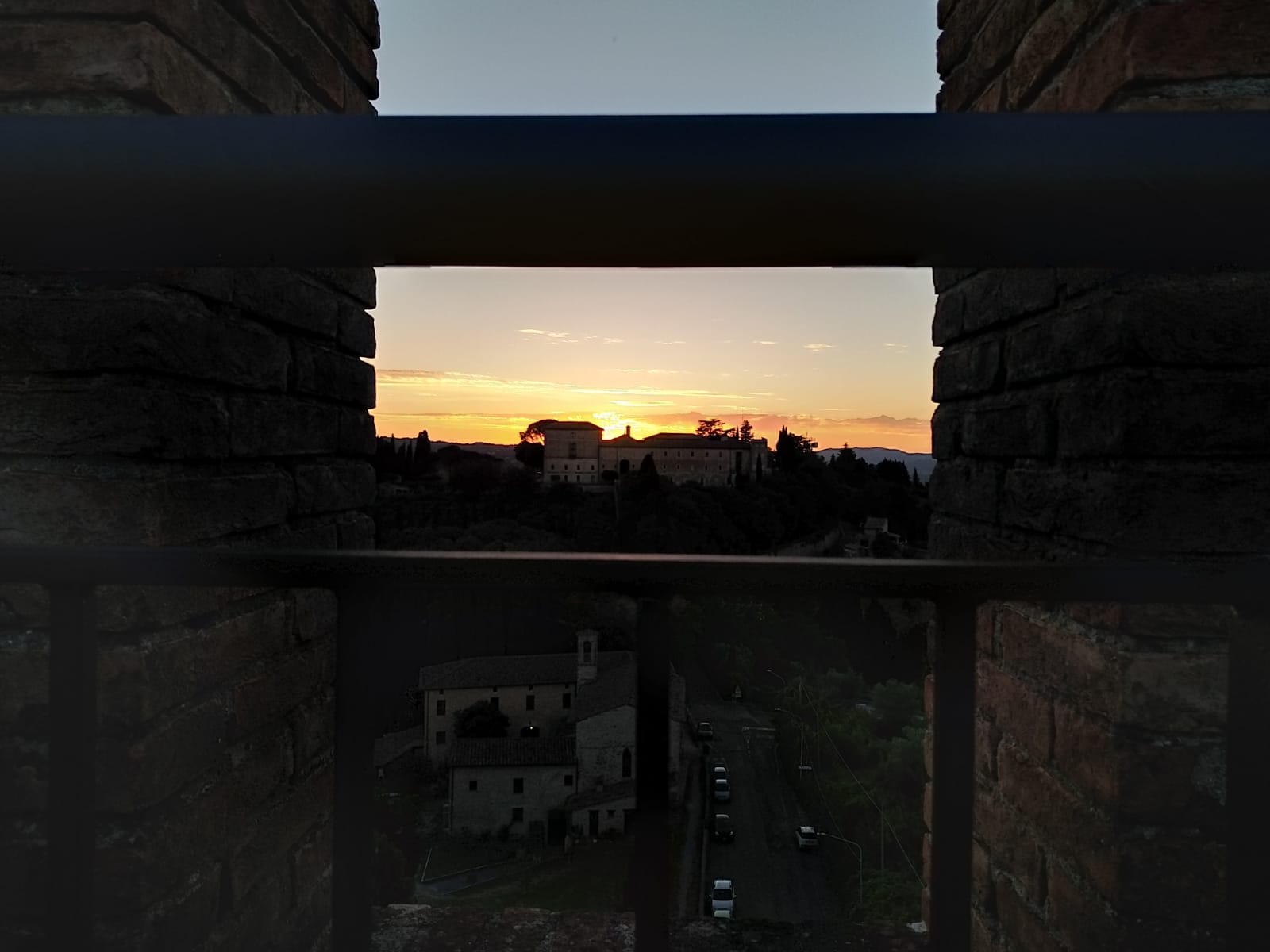
Dal tetto/terrazza della torre si ammira uno splendido panorama sulla città.
Come il borgo, la Porta prende il nome dall’antichissima chiesa paleocristiana dedicata a San Michele Arcangelo. Il suo stemma è rappresentato dalle ali dell’Arcangelo con al centro la spada. Il Santo protettore è San Michele Arcangelo, la cui ricorrenza è il 29 settembre. Il colore associato è il rosso come la spada fiammeggiante e la legna per il fuoco proveniente dai boschi a nord di Perugia.
Da qui usciva una delle cinque vie regali proveniente dalla platea magna e diretta a nord. Veniva chiamata anche Porta degli Armeni per l’antico monastero basiliano fuori le mura e Porta San Matteo e/o San Cristoforo per l’uso del trasferimento del nome da una porta più antica (posta a metà di via della Lungara odierno Corso Garibaldi), ad un’altra più esterna.
Oggi sede del Museo degli strumenti musicali antichi
__________________________
The biggest medieval Gate, fortified by Ambrogio Maitani in 1326, belongs to the XIV Century City walls.
Outside it presents three levels, of three different construction phases, each marked by the use of different materials. The first is of sandstone, like the walls of the same age. The second level was made with limestone, probably dating back to the ‘70s of the XIV Century; this part was expressly wanted by the “legato pontificio” (Papal Legate) Gérard du Puy, known as Abbate di Monmaggiore, who, considering the strategic importance of the place linked it to the fortress of Porta Sole and to the Porta di S. Antonio. The third level, made of bricks (1416-24), was projected by the Architect Fioravante Fioravanti, following the orders of the Lord of Perugia Braccio Fortebracci. The definitive transformation in keep, with trapdoors, slits and embrasures dates to 1479 .
Restored several times during the following Centuries, since the ‘90s of the XX Century hosted the Museum of the “City Walls and Doors” and, after that, a “Diffused educational itinerary on ancient music instruments”.
From the roof terrace of the tower you have a a splendid view of the city.
As the District in which it is placed, the Door takes its name from the paleo Christian Church entitled to St Michele Arcangelo. Its coat of arm consists of the wings of the Archangel with a sword at its centre. The protector Saint is St Michele Arcangelo, whose recurrence is on the 29 of September. The colour is red as the flaming sword and the fire of wood coming from the woodland north of Perugia.
From here started one of the five Royal Street, northbound from the main square of the city. It was also known as Door of the Armenians because of the ancient Basilian monastery just outside the walls and Door of San Matteo and/or San Cristoforo from the name of an old door a bit before along the old via della Lungara – today Corso Garibaldi.
Today Museum of Ancient Music Instruments
Galleria di immagini
Modalità di accesso
Non accessibile a persone con disabilità motoria
__________________________
Not wheelchair accessible
Dove
Indirizzo
CAP
Orari di apertura
Per orari consulta i contatti che trovi su ulteriori informazioni
__________________________
For opening hours and entrance fee see ulteriori informazioni
Contatti
Ulteriori informazioni
Info
+39 371.693.9675
artemusicadelperugino@gmail.com
www.artemusicadelperugino.com