Porta San Girolamo – Gate of San Girolamo
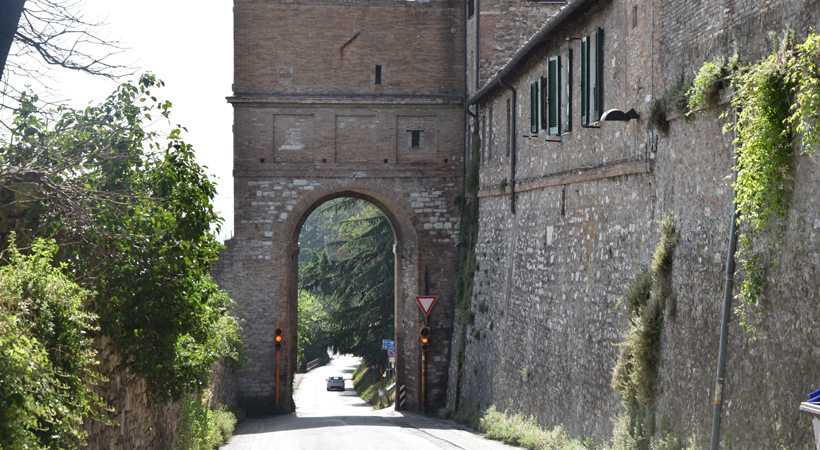
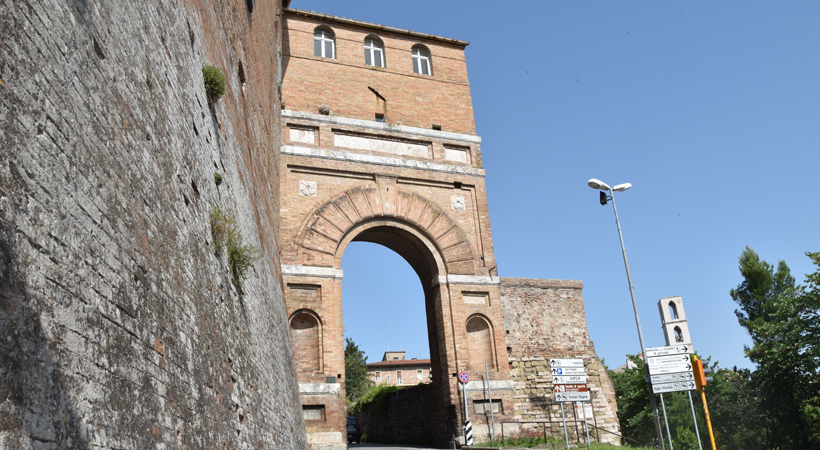
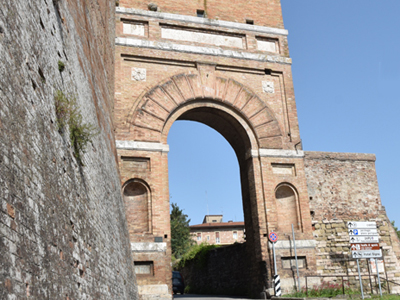
Costruita alla fine del XV sec. era l’antico accesso alla città per chi veniva da Roma, da cui derivava l’appellativo di Porta Romana
The gate was built at the end of the XV Century and was he ancient entry to the City for people coming from Rome
Descrizione
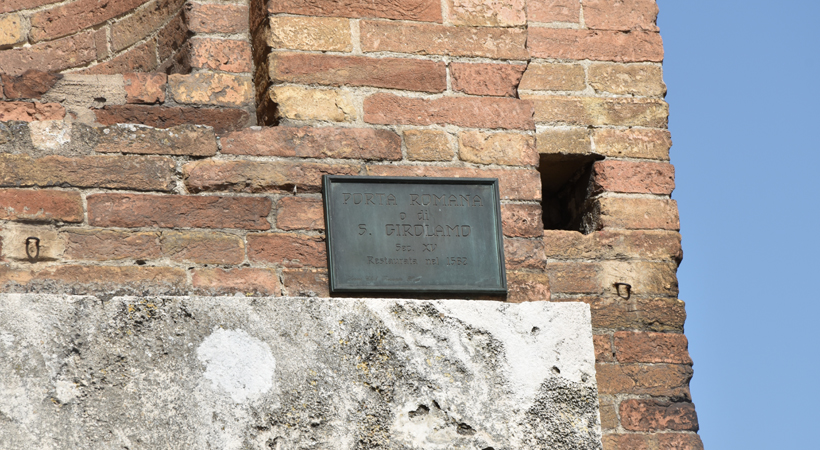
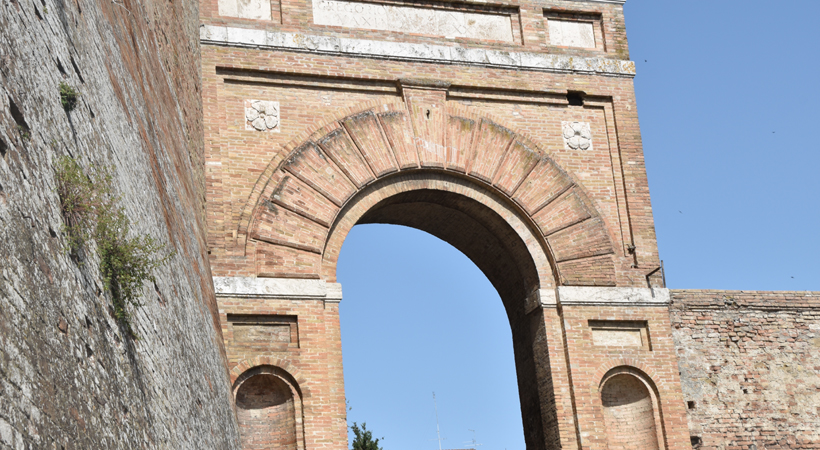
Costruita contemporaneamente all’attiguo convento francescano amadeita (oggi Cinema Zenith)nel XV sec, fu riscostruita nel 1582 su progetto di Valentino Martelli e a commissione del Cardinale legato apostolico Alessandro Riario, da cui deriva anche il nome di Porta Alessandrina, in uso fino al 1800. L’opera fu eseguita sotto il pontificato di Gregorio XIII come testimonia l’iscrizione sopra l’arco: GREGORIO III MAX MDLXXXII.
Nel lato esterno rivolto a est presenta due nicchie, dove fino alla metà del 1800 erano collocate le statue di San Pietro e San Paolo, portate nel XIX sec. all’Università degli Studi.
Da questa porta parte la marcia della pace Perugia-Assisi sin dal 24 Settembre 1961, quando partì l’iniziativa ideata da Aldo Capitini.
______________________________
The gate was built at the end of the XV Century, together with the adjacent Franciscan monastery (today Zenit cinema); it was the ancient entry to the City for people coming from Rome, hence the name “Porta Romana” (Roman Gate).
It was rebuilt in brick in 1582, following the project of Valentino Martelli and commissioned by the Cardinal Alessandro Riario, from which the appellative of “Porta Alessandrina”, used until the XIX Century. The reconstruction was made under Pope Gregory XIII as written in the inscription above the arch: GREGORIO III MAX MDLXXXII .
In the East-oriented external side it has two recesses where, until the half of the XIX Century were placed the statues of San Pietro and San Paolo, recently moved to the University of Perugia.
The Perugia-Assisi March for Peace starts from this Gate, since the 24th of September 1961, when Aldo Capitini started the initiative.
Galleria di immagini
Modalità di accesso
Luogo all’aperto accessibile a persone con disabilità motoria
______________________________
Open air place, wheelchair accessible