Porta Eburnea detta Arco della Mandorla – Ivory Gate, also Known as “Arco della Mandorla” – Almond Arch
Porta inserita nella cinta muraria etrusca
Gate belonging to the Etruscan City Walls
Descrizione
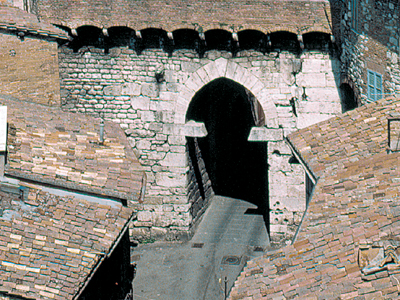
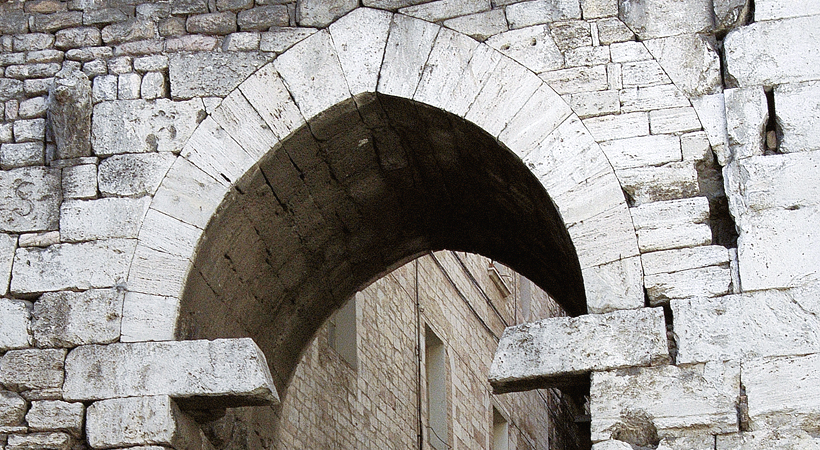
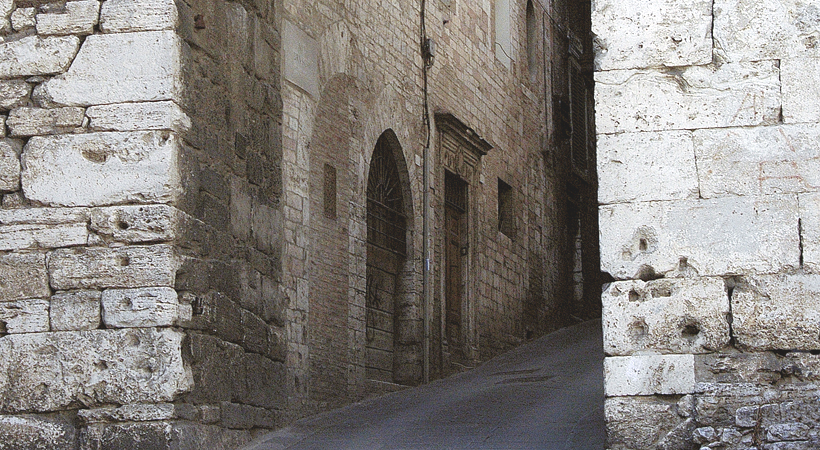
Secondo una credenza popolare questo luogo si riteneva essere “fausto”, tanto che i Baglioni, residenti nel rione di Porta Eburnea, passavano per questa porta prima di partire per le battaglie. Conserva conci originali in travertino fino all’imposta della copertura, sostituita in età medievale da un arco a sesto acuto, da cui deriva il nome di “Mandorla”. L’appellativo più antico “Eburnea” si riferirebbe alle zanne di avorio dell’elefante, simbolo del rione. La porta è attraversata dalla via regale che portava ad Orvieto; alla sua sinistra resta un bel tratto di mura etrusche che continuano lungo le scalette di via del Paradiso, ristrutturate in epoche successive come dimostrano i resti dell’epigrafe romana Augusta Perusia Colonia Vibia. A destra seguono resti ben conservati fin sotto la Torre Donati.
Lo stemma della porta e del rione è un elefante, che porta in groppa una torre d’avorio in campo verde, simbolo dei giardini e degli orti di cui il rione abbondava.
______________________________
It belongs to the Etruscan City Walls and maintains the original quoins in travertine up to the transom of the arch, replaced during the Middle Ages with a pointed arch, whence the name “Arco della Mandorla” (Almond Arch). The ancient name “Eburnea” (made of ivory) is referred to the elephant ivory tusks, symbol of the District. The door is crossed by the Royal Street to Orvieto, on the left, an important section of Etruscan Walls along the steps of via del Paradiso, renovated in following epochs, as proved by the remains of a Roman epigraph Augusta Perusia Colonia Vibia. On the right, a well preserved sections of Walls up to Torre Donati.
Following a popular tradition this place was “propitious”, so the Baglioni family, dwellers of Porta Eburnea District, used to cross that Door when they left for a battle.
The Coat of Arms of the Gate and District is the elephant, with an ivory tower on its back, on green background, to represent the great presence of gardens in this district.
Galleria di immagini
Modalità di accesso
Luogo all’aperto accessibile a persone con disabilità motoria
______________________________
Open air place, wheelchair accessible