Arco di Braccio – Arch of Braccio
Porta della cinta medioevale della città, attraversata dalla via regale e papale
The South-oriented Gate was in the medieval City walls, it is crossed by the Royal and Papal streets.
Descrizione
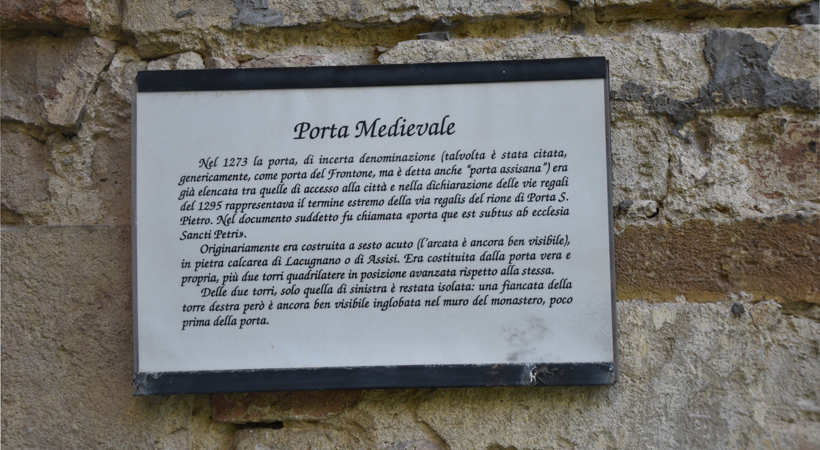
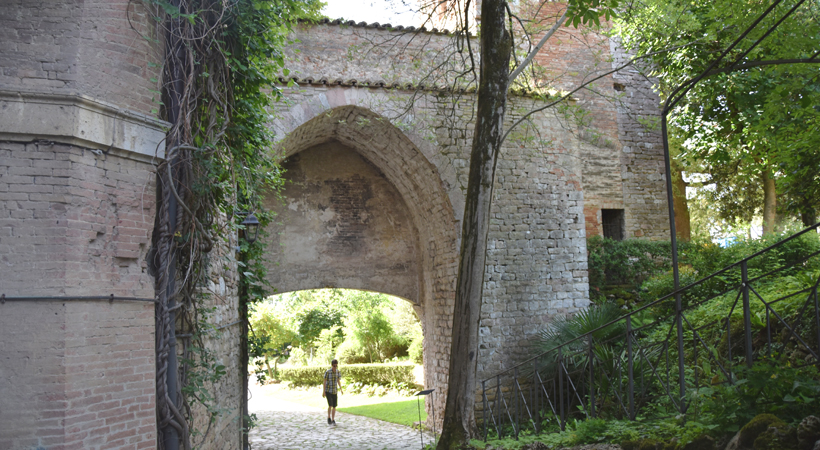
La porta, rivolta a sud, fu costruita nel 1250 nella cinta medievale perugina.
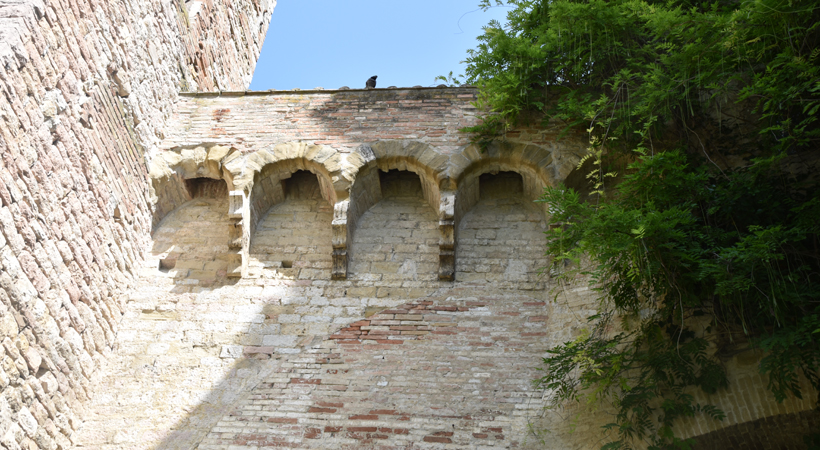
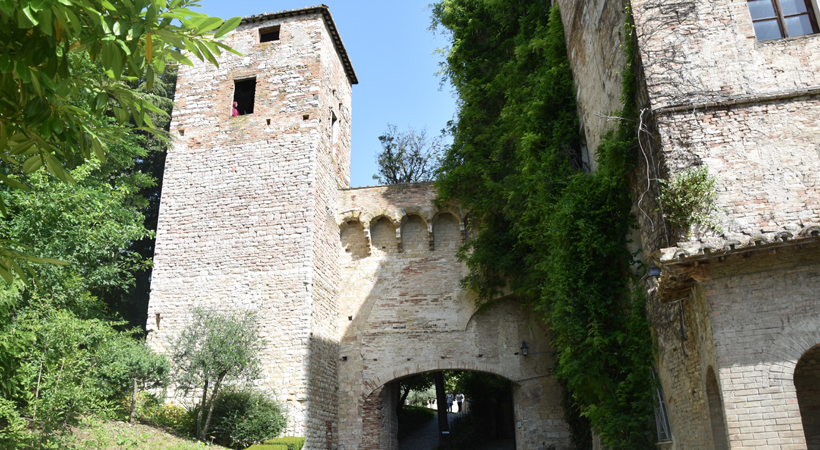
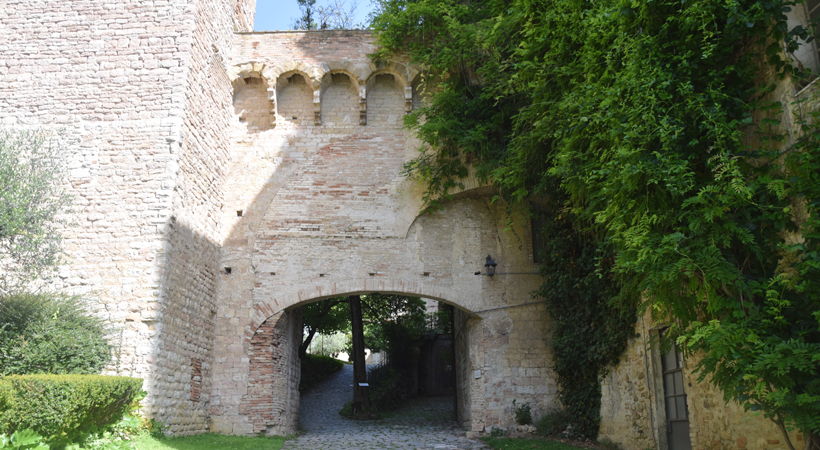
Fu ricostruita in seguito con l’arco ribassato, ma nel lato interno è ben visibile l’originario a ogiva. Esternamente era delimitata da due torri quadrangolari; oggi ne rimane una, mentre l’altra è inglobata nell’ampliamento cinquecentesco del monastero. Con l’apertura della porta San Costanzo (1587), quest’antica porta è rimasta inclusa negli orti del monastero, dove è tutt’ora visibile.
Prende il nome da Braccio Fortebraccio, Signore di Perugia dal 1416, che ristrutturò l’intera fortificazione e compiva esercitazioni militari nell’adiacente area detta ”piazza d’arme di Braccio”, dove oggi è la spianata dei giardini del Frontone.
______________________________
The South-oriented Arch was built in 1250 in the medieval City walls, it is crossed by the Royal and Papal street.
The arch was modified into a lowered one, but the original pointed arch is visible in the inner façade. It was delimited by two quadrangular towers, today, only the left one is visible. The other one was absorbed in the XVI Century monastery enlargement. With the Construction of San Costanzo Gate (1587), this ancient door remained in the monastery gardens where it can be seen today.
It is named after Braccio Fortebraccio, Lord of Perugia in 1416, who commissioned the restoration works for the fortification of the city and conducted the military training of his troops in the adjacent area called ”piazza d’arme di Braccio”, today the Frontone Gardens.
Galleria di immagini
Modalità di accesso
Accessibile a persone con disabilità motoria
______________________________
Wheelchair accessible
Dove
Indirizzo
CAP
Orari di apertura
Per orari consulta i contatti che trovi su ulteriori informazioni
__________________________
For opening hours see ulteriori informazioni
Contatti
Ulteriori informazioni
Info
+39 075/33753
info@fiapg.it
www.fondazioneagraria.it/arte/orto-botanico/