Postierla della Conca – The Etruscan “postierla” (postern) of the Conca
E' una porta minore della cinta muraria etrusca che veniva usata per il traffico pedonale
Minor Gate of the Etruscan walls used for pedestrian entrance
Descrizione
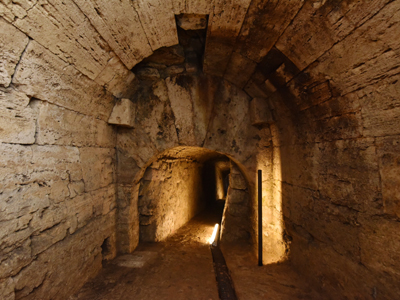
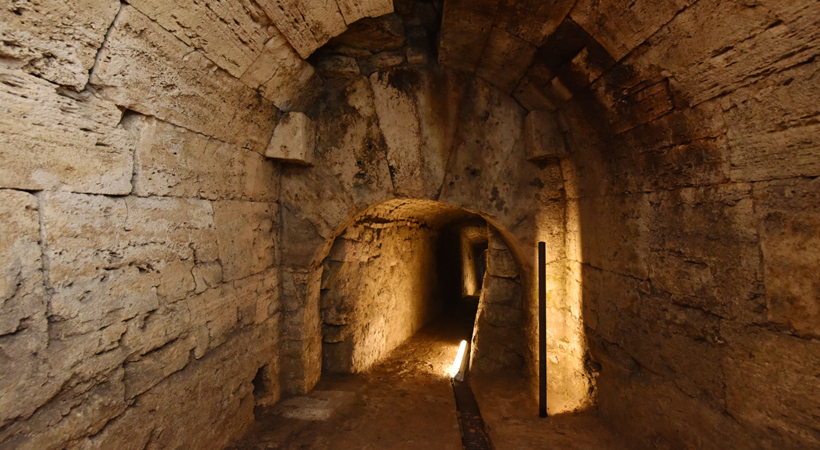
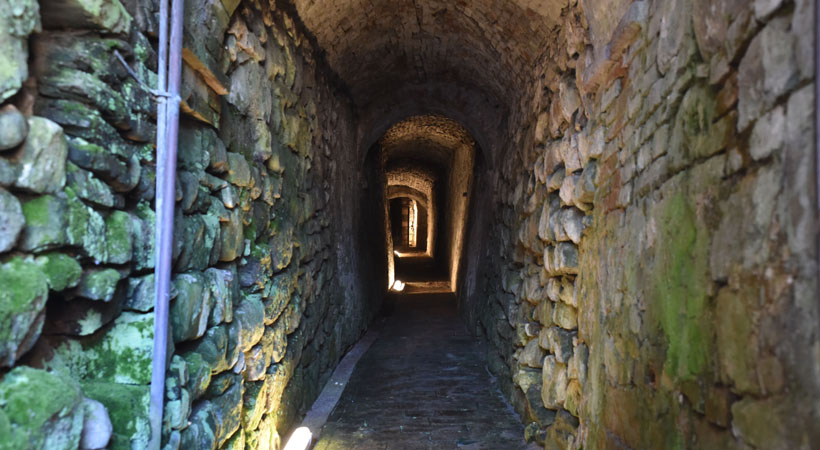
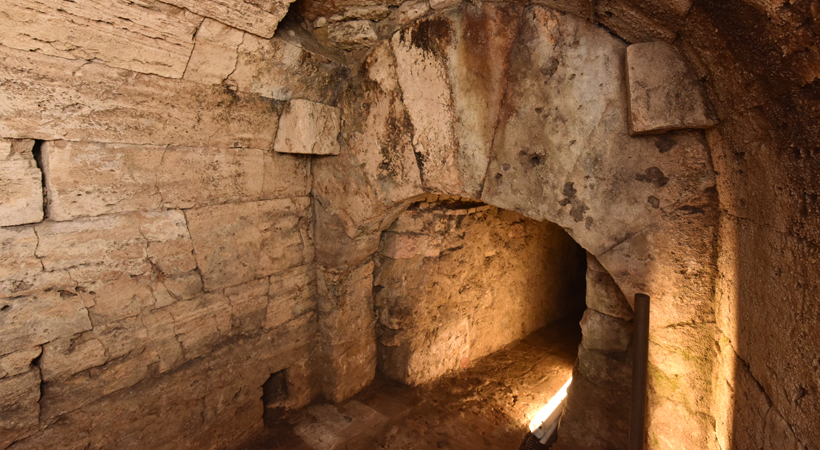
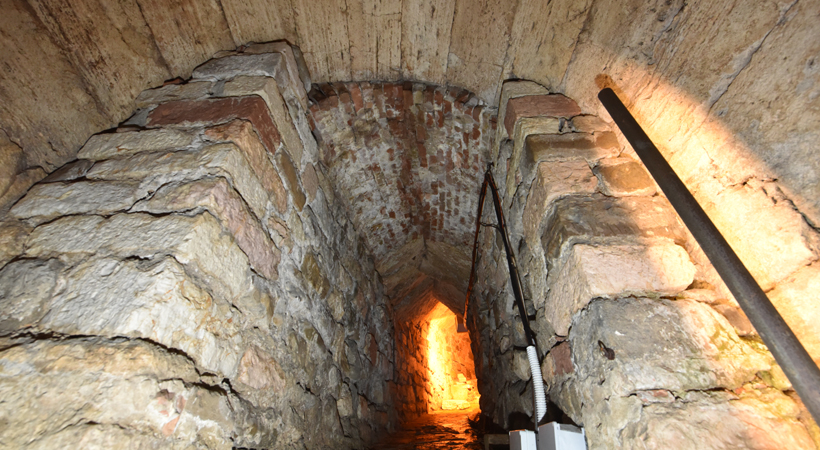
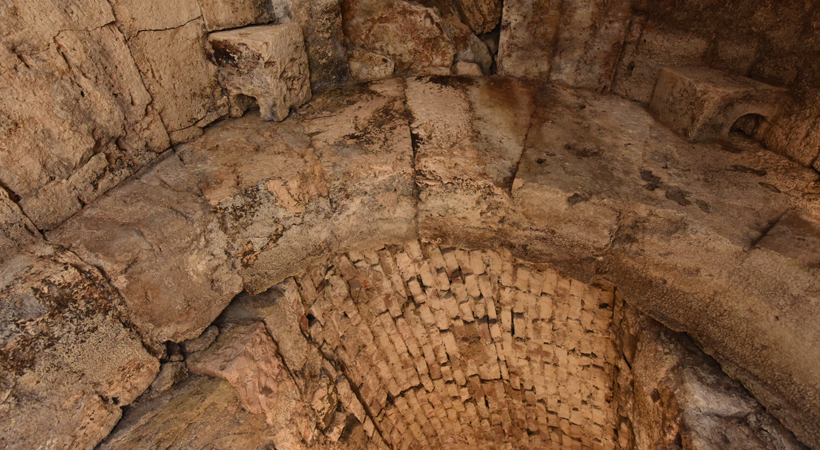
La Postierla della Conca è ubicata a non grande distanza dall’Arco Etrusco, che, insieme a quella della Cupa era usata per il traffico pedonale.Si data, per le sue caratteristiche tecniche, intorno a III-II sec. a.C. E’ ubicata all’interno di un cunicolo medievale, a circa 23 metri dall’imboccatura. La veduta esterna della porta è poco visibile, a causa dei vari interventi successivi, mentre all’interno è apprezzabile l’arco costituito da nove cunei in travertino.Ai lati dell’accesso, in alto, simmetricamente, sono incastrati nella volta i conci con i fori, dove erano i cardini delle porte. La porta introduce ad un piccolo vano di passaggio rettangolare costruito in blocchi di travertino squadrati, secondo la stessa tecnica delle mura etrusche. Ha copertura con volta a botte, in alcuni punti non perfettamente conservata.La porta, divenuta nel tempo inservibile al transito pedonale per l’innalzamento del piano di calpestio, venne recuperata ed intercettata da un cunicolo, durante la realizzazione della grandiosa opera dell’acquedotto medievale, intorno al 1275-1277.L’acqua, proveniente da Monte Pacciano, e risalente sopra gli Arconi dell’attuale via dell’Acquedotto, raggiungeva la Fontana Maggiore nella vicina piazza comunale.
______________________________
The “Postierla” of the Conca is a minor gate of the Etruscan walls, not far away from the Arco Etrusco (Etruscan Arch), that, together with the one at the Cupa, was used as pedestrians gateway. It can be dated, for its technical characteristics, at about the III-II Century B.C. It is right inside a medieval burrow, about 23 meters from the entrance. The external view of the gate is not really well visible, because of various subsequent works, while inside it can well be seen the arch, consisting of nine travertine wedges.
To the sides of the entrance, above, symmetrically, are embedded the ashlars with holes, where the hinges of the door were. The gate opens into a little rectangular passing made by square travertine blocks, placed using the same technique of the Etruscan Walls. It is covered by a barrel vault ceiling, in some places not in perfect conditions.
The gate, in time become unusable for pedestrian transit because of the a rising of the walk-over flooring, was restored and intercepted by a burrow, during the construction of the majestic medieval aqueduct in 1275-1277. Coming all the way from the Monte Pacciano above the Arconi (Arches) of the present via dell’Acquedotto, the water reached the Fontana Maggiore in the close square.
Galleria di immagini
Modalità di accesso
Non accessibile a persone con disabilità motoria; non visitabile
______________________________
Closed, not wheelchair accessible
Dove
Indirizzo
CAP
Orari di apertura
Chiusa
______________________________
Closed